
Why Every Business Needs a Social Media Content Calendar
If you’ve ever scrambled to post something — anything — on your business’s social media accounts at the last minute, you already understand the value of a social media content calendar. Planning your content isn’t just a time-saver; it’s a strategic advantage that helps you stay consistent, on-brand, and ahead of your competition. In this guide, we’ll walk you through exactly how to build one from scratch, even if you’re starting with zero systems in place.
What Is a Social Media Content Calendar?
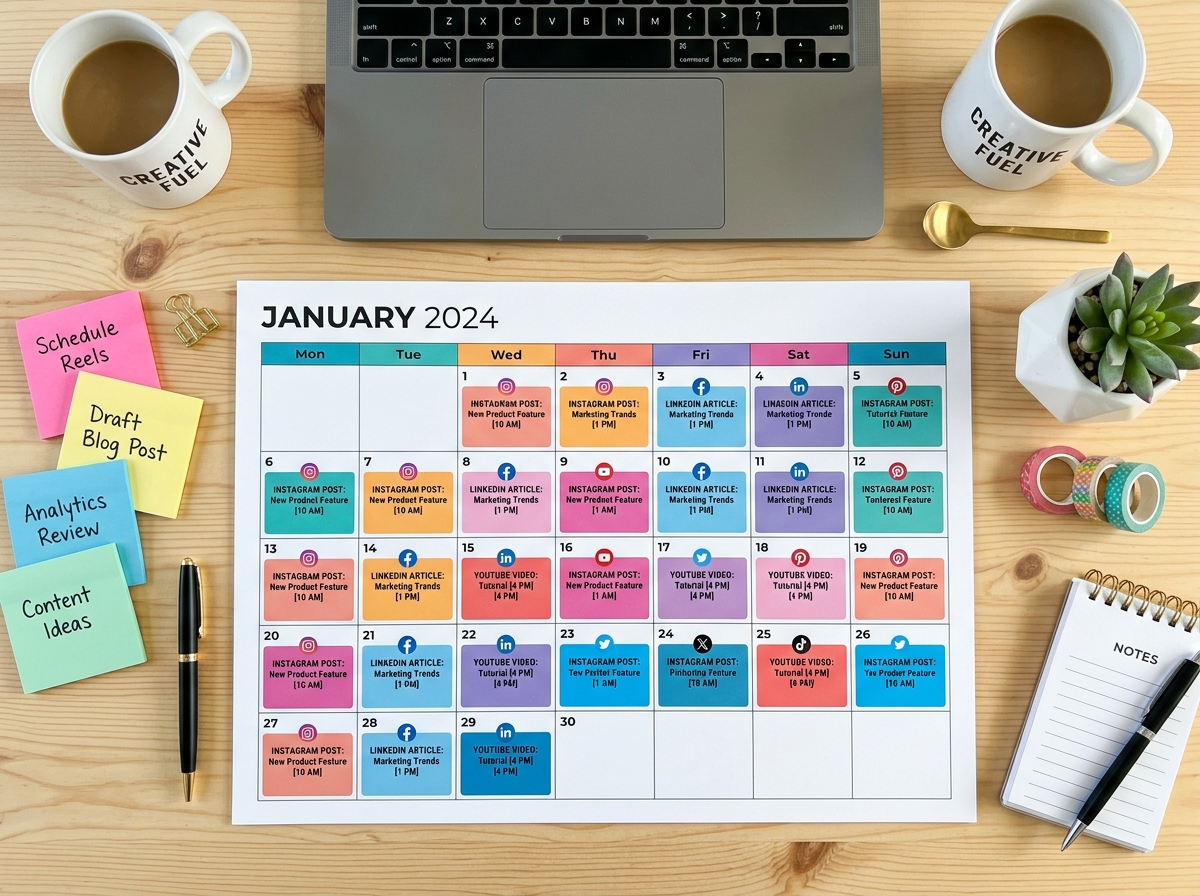
A social media content calendar is a planning tool — typically a spreadsheet, project management board, or dedicated software — that maps out what content you’ll publish, on which platforms, and when. Think of it as your editorial roadmap for all things social. It keeps your team aligned, your messaging consistent, and your audience engaged without the daily stress of figuring out what to post.
Beyond just scheduling posts, a well-built calendar helps you track campaigns, align content with business goals, and measure what’s working over time. It’s one of the most powerful tools in any digital marketer’s toolkit.
Step 1: Define Your Goals and Audience
Before you open a spreadsheet or sign up for a scheduling tool, get clear on two things: what you want to achieve and who you’re talking to. Your goals might include increasing brand awareness, driving website traffic, generating leads, or boosting product sales. Your audience will determine the tone, format, and platform of your content.
- Brand Awareness: Focus on shareable, visually engaging content
- Lead Generation: Prioritize educational posts, free resources, and CTAs
- Community Building: Use polls, questions, and user-generated content
- Sales: Highlight product features, testimonials, and limited-time offers
Once your goals are defined, every piece of content you add to your calendar should serve at least one of them. This keeps your strategy focused and your results measurable.
Step 2: Choose Your Platforms and Posting Frequency
Not every business needs to be on every platform. Choose the channels where your target audience actually spends time. A B2B company might thrive on LinkedIn, while a lifestyle brand may see better results on Instagram and TikTok.
Recommended Posting Frequencies by Platform
- Instagram: 3–5 times per week (feed posts + daily Stories)
- Facebook: 3–5 times per week
- LinkedIn: 2–4 times per week
- TikTok: 5–7 times per week for best reach
- X (Twitter): 1–3 times per day
- Pinterest: 5–10 pins per day (can be automated)
Start with what’s sustainable for your team. It’s far better to post consistently on two platforms than to burn out trying to manage six.
Step 3: Build Your Content Categories
One of the secrets to a high-performing social media content calendar is content variety. If every post is a sales pitch, your audience will tune out. Instead, create a mix of content pillars — recurring themes that reflect your brand and serve your audience.
Common Content Pillars Include:
- Educational: Tips, how-tos, tutorials, and industry insights
- Promotional: Product launches, sales, and service highlights
- Engagement: Questions, polls, and community shoutouts
- Behind-the-Scenes: Team culture, processes, and brand story
- User-Generated Content: Customer reviews, photos, and testimonials
- Trending/Seasonal: Holidays, awareness days, and viral topics
A good rule of thumb is the 80/20 rule: 80% of your content should educate, entertain, or engage — and only 20% should directly promote your products or services.
Step 4: Set Up Your Calendar Structure
Now it’s time to actually build your social media content calendar. You can use a simple Google Sheet, a tool like Notion or Trello, or a dedicated platform like Buffer, Hootsuite, or Later. Whatever you choose, your calendar should include the following columns or fields:
- Date and Time: When the post goes live
- Platform: Which social network is it for
- Content Pillar: The category it falls under
- Caption/Copy: The actual post text
- Visual Asset: Image, video, or graphic link
- Hashtags: Relevant tags for discoverability
- Link/CTA: Any URL or action you want the audience to take
- Status: Draft, Scheduled, or Published
Color-coding by platform or content type can make your calendar much easier to scan at a glance — especially if you’re managing multiple brands or team members.
Step 5: Plan Content in Batches
One of the biggest productivity wins in social media management is batch content creation. Instead of creating posts one at a time, dedicate a block of time — weekly or monthly — to plan and create content in bulk. This approach reduces decision fatigue, keeps your messaging cohesive, and frees up your daily schedule for engagement and community management.
Many successful marketers plan one month, leaving room for real-time content and trending topics. Use your calendar to block out key dates like product launches, holidays, and industry events so you can create timely, relevant content well in advance.
Step 6: Review, Analyze, and Adjust
A social media content calendar is a living document — not a set-it-and-forget-it system. At the end of each month, review your analytics to see which posts performed best. Look at metrics like reach, engagement rate, link clicks, and follower growth. Use those insights to refine your content mix, posting times, and messaging for the following month.
If educational posts consistently outperform promotional ones, create more of them. If video content drives more engagement than static images, shift your production accordingly. Let the data guide your decisions.
Tools to Help You Manage Your Content Calendar
- Buffer: Simple scheduling with analytics built in
- Later: Visual-first planning, great for Instagram
- Hootsuite: Robust platform for teams managing multiple accounts
- Notion or Trello: Flexible, customizable calendar boards
- Google Sheets: Free and fully customizable for any workflow
Start Planning Smarter Today
Building a social media content calendar is one of the highest-leverage moves you can make for your digital marketing strategy. It eliminates the guesswork, reduces stress, and ensures your brand shows up consistently — which is the foundation of long-term growth on social media.
Whether you’re a solopreneur managing your own accounts or a marketing team handling multiple brands, a well-structured content calendar will transform the way you work. Start simple, stay consistent, and refine as you go.
Ready to take your social media strategy to the next level? Explore our other resources on digital marketing, content strategy, and AI-powered tools to help your business grow faster and smarter.