
Dropshipping vs. E-commerce: Which Business Model Is Right for You?
If you’re thinking about launching an online store, one of the first decisions you’ll face is choosing between dropshipping and e-commerce. Both models offer real opportunities to build a profitable online business, but they work in very different ways. Understanding the key differences can save you time, money, and a lot of frustration down the road. In this guide, we’ll break down everything you need to know to make a confident, informed decision.
What Is Traditional E-commerce?
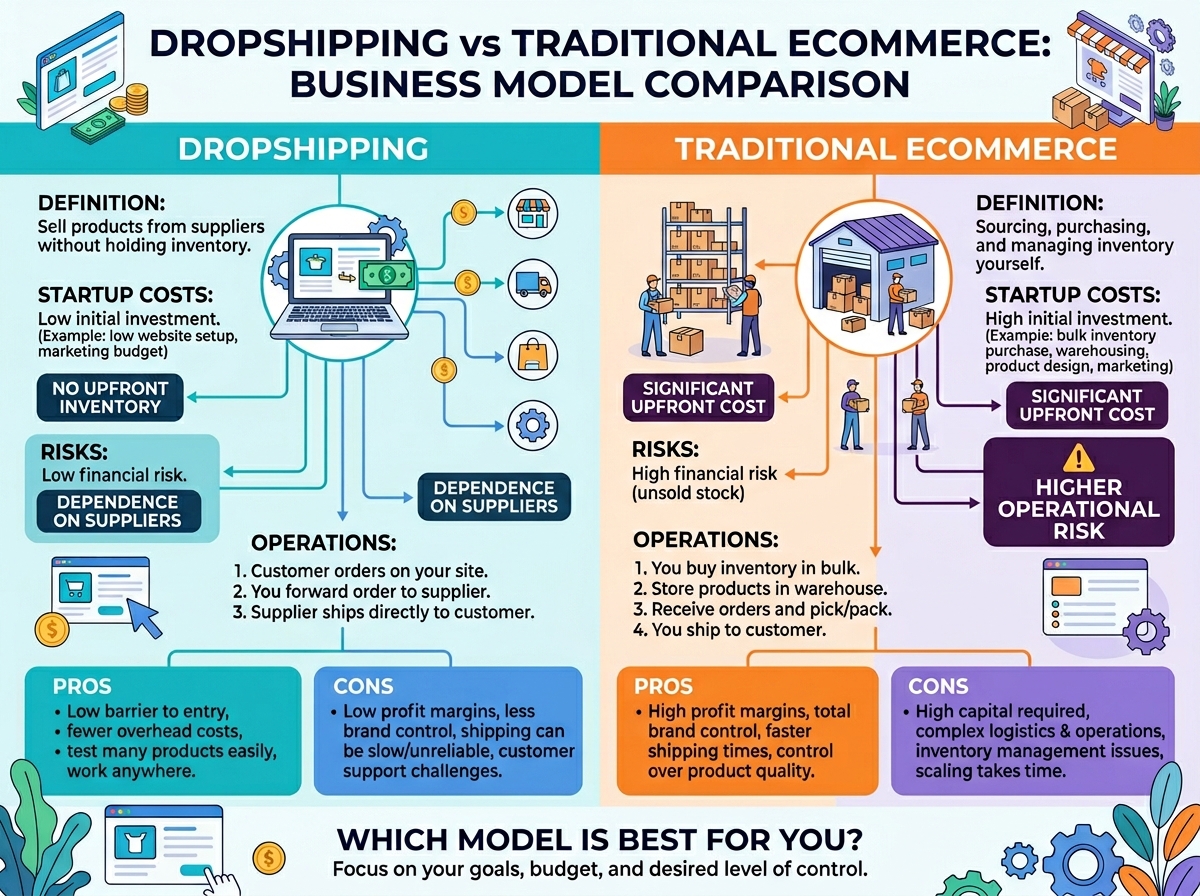
Traditional e-commerce involves buying or manufacturing products in bulk, storing them in a warehouse or fulfillment center, and shipping them directly to customers when orders come in. Think of brands like Amazon sellers, Shopify store owners, or any retailer who physically handles their own inventory.
Key Characteristics of Traditional E-commerce
- You own and manage your inventory — products are purchased upfront and stored until sold
- Higher startup costs — you need capital for stock, storage, and logistics
- Greater control over product quality — you inspect and manage what you sell
- Faster shipping times — you control fulfillment speed and packaging
- Higher profit margins — buying in bulk typically lowers your cost per unit
Traditional e-commerce is ideal for entrepreneurs who want to build a strong brand identity, offer a premium customer experience, and scale a product-based business over the long term.
What Is Dropshipping?
Dropshipping is a fulfillment model where you sell products online without ever holding inventory. When a customer places an order, you forward it to a third-party supplier who ships the product directly to the customer on your behalf. You never touch the product.
Key Characteristics of Dropshipping
- No inventory required — products are shipped directly from the supplier
- Low startup costs — you only pay for products after you’ve made a sale
- Less control over quality and shipping — you rely entirely on your supplier
- Lower profit margins — suppliers charge more per unit than bulk pricing
- Highly scalable — you can add new products without additional overhead
Dropshipping is popular with first-time entrepreneurs and side hustlers who want to test the e-commerce waters without a large financial commitment.
Dropshipping vs E-commerce: Head-to-Head Comparison
Now that we understand both models, let’s compare them across the factors that matter most to online business owners.
1. Startup Costs
This is where dropshipping clearly wins. With dropshipping, you can launch a store for a few hundred dollars — covering your website, domain, and marketing. Traditional e-commerce can require thousands of dollars upfront for inventory, warehousing, and logistics setup. If you’re working with a limited budget, dropshipping vs E-commerce comparisons almost always favor dropshipping as the lower-risk entry point.
2. Profit Margins
Traditional e-commerce typically delivers higher profit margins because you’re buying products at wholesale or manufacturing prices. Dropshipping margins are thinner — often between 10% and 30% — because suppliers charge a premium for the convenience of handling fulfillment. If maximizing profit per sale is your priority, traditional ecommerce has the edge.
3. Inventory and Fulfillment Control
With traditional ecommerce, you control every step of the fulfillment process — from packaging to shipping speed. This means you can offer branded packaging, faster delivery, and consistent quality. Dropshipping removes that control entirely. If a supplier runs out of stock or ships a damaged product, your brand reputation takes the hit.
4. Scalability
Dropshipping is incredibly easy to scale in terms of product range. You can add hundreds of new products to your store overnight without worrying about storage or upfront costs. Scaling a traditional e-commerce business requires more capital investment as you increase inventory levels and potentially expand warehouse space.
5. Brand Building
Building a recognizable, trusted brand is much easier with traditional e-commerce. You control the unboxing experience, product quality, and customer journey from start to finish. Dropshipping businesses often struggle to differentiate themselves because many stores sell the same products from the same suppliers.
6. Time and Effort
Dropshipping requires less day-to-day operational work since you’re not managing inventory or packing orders. However, you’ll spend more time on customer service, supplier management, and marketing. Traditional e-commerce demands more operational involvement but gives you more levers to pull when optimizing the customer experience.
Which Model Is Right for Your Business?
The honest answer is: it depends on your goals, budget, and risk tolerance. Here’s a simple way to think about it:
- Choose dropshipping if you’re a beginner, have limited capital, want to test product ideas quickly, or are building a side income stream
- Choose traditional e-commerce if you’re serious about building a long-term brand, have startup capital to invest, want higher margins, and are ready to manage operations
- Consider a hybrid approach — many successful store owners start with dropshipping to validate products, then transition to holding inventory for their best-sellers once they’ve proven demand
When evaluating dropshipping vs. e-commerce for your specific situation, think about where you want to be in three to five years, not just what’s easiest to launch today.
Common Mistakes to Avoid
Regardless of which model you choose, some pitfalls trip up new online store owners regularly.
- Ignoring supplier reliability — always vet your suppliers thoroughly before listing their products
- Underestimating marketing costs — neither model works without consistent traffic and promotion
- Neglecting customer service — poor communication kills repeat business in both models
- Skipping market research — validate demand before investing time or money into any product niche
- Overlooking legal and tax obligations — e-commerce businesses have real compliance requirements regardless of model
Final Thoughts
The dropshipping vs. e-commerce debate doesn’t have a one-size-fits-all answer. Both models have helped thousands of entrepreneurs build successful online businesses. The key is aligning your chosen model with your resources, goals, and long-term vision. Start lean, validate your ideas, and scale what works.
Whether you’re just getting started or looking to optimize an existing store, having the right strategy and tools in place makes all the difference. Ready to take your e-commerce business to the next level? Explore our resources on building high-converting online stores, choosing the right ecommerce platform, and driving traffic that actually converts. Browse our e-commerce guides here and start building smarter today.