
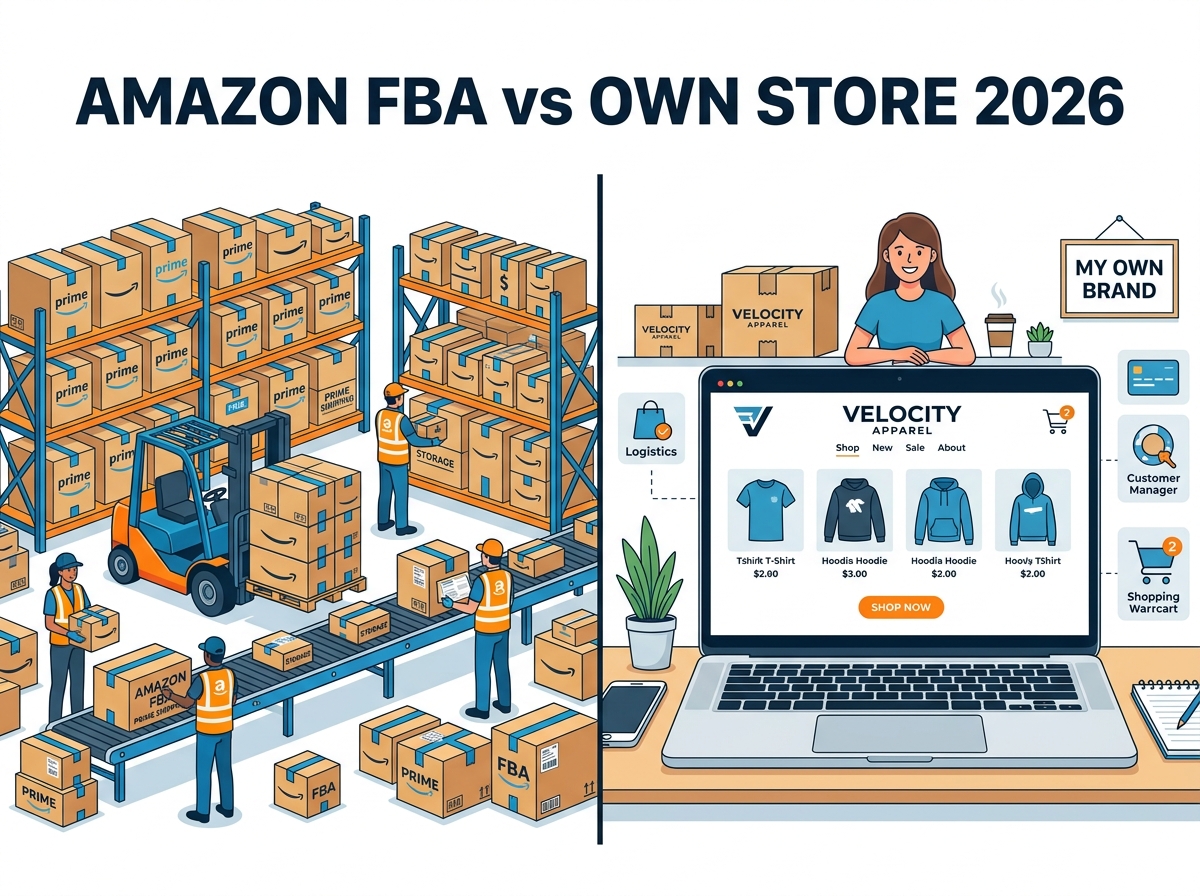
If you’re trying to decide between Amazon FBA vs your own store, you’re not alone. It’s one of the most common questions we hear from entrepreneurs and small business owners who are ready to sell online but aren’t sure which path makes the most sense. Both options have real advantages — and real drawbacks. This honest 2026 comparison will help you cut through the noise and make a decision that actually fits your goals.
What Is Amazon FBA and How Does It Work?
Fulfillment by Amazon (FBA) is a service where you send your products to Amazon’s warehouses, and they handle storage, packing, shipping, and even customer service on your behalf. It sounds like a dream setup — and in some ways, it is. But there’s a lot happening behind the scenes that sellers don’t always account for upfront.
The Advantages of Amazon FBA
- Massive built-in audience: Amazon has over 300 million active customers. You’re tapping into a marketplace people already trust and shop from daily.
- Hands-off fulfillment: You don’t have to worry about packing boxes or managing shipping logistics. Amazon handles it all.
- Prime eligibility: FBA products automatically qualify for Amazon Prime, which significantly boosts your conversion rates.
- Faster launch: You can get products listed and selling relatively quickly without building a website from scratch.
The Downsides of Amazon FBA
- High fees: Between referral fees, FBA fulfillment fees, and storage fees, Amazon can take 30–40% of your revenue depending on your product category.
- You don’t own the customer: Amazon owns the relationship. You can’t email your buyers, retarget them, or build a loyal community around your brand.
- Fierce competition: You’re often competing directly with Amazon’s own private label products — and sometimes losing to them.
- Account vulnerability: Your entire business can be suspended with little warning. Many sellers have lost everything overnight due to policy violations or false complaints.
What Does Running Your Own Online Store Look Like?
Building your own online store — typically through platforms like Shopify, WooCommerce, or BigCommerce — means you’re creating a branded shopping experience that you fully control. It requires more upfront effort, but the long-term payoff can be significantly greater. If brand building and customer ownership matter to you, this path deserves serious consideration.
If you’re thinking about building a store, check out our guide on e-commerce website design for small businesses to understand what goes into creating a high-converting online store.
The Advantages of Your Own Store
- You own your customer data: Email lists, purchase history, retargeting audiences — all yours. This is gold for long-term marketing.
- Full brand control: Your store looks, feels, and communicates exactly how you want it to. No competing listings, no Amazon branding.
- Better margins: Without Amazon’s fees eating into your profits, you keep significantly more of every sale.
- Flexibility and scalability: You can add subscriptions, bundles, loyalty programs, and custom checkout flows that Amazon simply won’t allow.
The Challenges of Your Own Store
- You have to drive your own traffic: There’s no built-in audience. You’ll need SEO, paid ads, social media, and email marketing to bring people to your store.
- More setup required: Building a store, setting up payments, managing fulfillment, and handling customer service all fall on you — at least initially.
- Slower to gain traction: It takes time to build trust and organic traffic. Don’t expect overnight results.
Amazon FBA vs Own Store: The Real Cost Comparison
When comparing Amazon FBA vs your own store, the numbers tell an important story. On Amazon, you might pay a 15% referral fee plus $3–$6 in FBA fees per unit, plus monthly storage. On a platform like Shopify, you’re looking at a monthly subscription (starting around $39/month) plus payment processing fees of around 2.9% + 30¢ per transaction. The difference in margins can be dramatic, especially as your volume grows.
That said, the cost of acquiring customers on your own store through paid advertising can be significant, especially early on. Amazon gives you traffic — you just pay for it through fees instead of ad spend. Neither model is “free.” The question is which investment makes more sense for your specific product and business model.
Want to reduce your customer acquisition costs with smarter digital marketing? Our post on SEO strategies for e-commerce stores covers exactly how to build sustainable organic traffic without relying on paid ads alone.
So Which One Should You Choose in 2026?
Here’s the honest answer: it depends on where you are in your business journey. Amazon FBA is a strong option if you want to validate a product quickly, don’t have an existing audience, and are comfortable operating within Amazon’s rules. Your own store is the better long-term play if you’re building a brand, want to own your customer relationships, and are willing to invest in marketing.
Many successful sellers actually do both — using Amazon to generate cash flow while simultaneously building their own store and email list. This hybrid approach reduces risk and gives you the best of both worlds. The key is not letting Amazon become your only channel, because that’s a fragile business model no matter how well it’s going today.
If you’re leaning toward building your own store and want to automate your marketing workflows, explore how Make.com automation can streamline your e-commerce operations and save you hours every week.
Key Takeaways: Amazon FBA vs Own Store
- Amazon FBA offers speed and built-in traffic, but you don’t own the customer relationship or control your account security.
- Your own online store gives you full brand control, better margins, and valuable customer data — but requires active marketing to drive traffic.
- Amazon fees can consume 30–40% of revenue; your own store has lower ongoing costs but higher upfront marketing investment.
- A hybrid strategy — selling on Amazon while building your own store — is a smart way to reduce risk in 2026.
- Long-term brand building almost always favors owning your own store and customer list.
Choosing between Amazon FBA vs your own store is one of the most important decisions you’ll make as an online seller. There’s no universally right answer, but there is a right answer for your business — and it starts with getting clear on your goals, your budget, and how much control you want over your brand’s future.
Not sure which direction is right for you? Let’s talk it through. At LetsGetSocialOnline.com, we help small businesses and entrepreneurs build smart, sustainable e-commerce strategies — from store design to SEO to automation. Contact us today for a free strategy consultation and let’s figure out the best path forward for your business.