
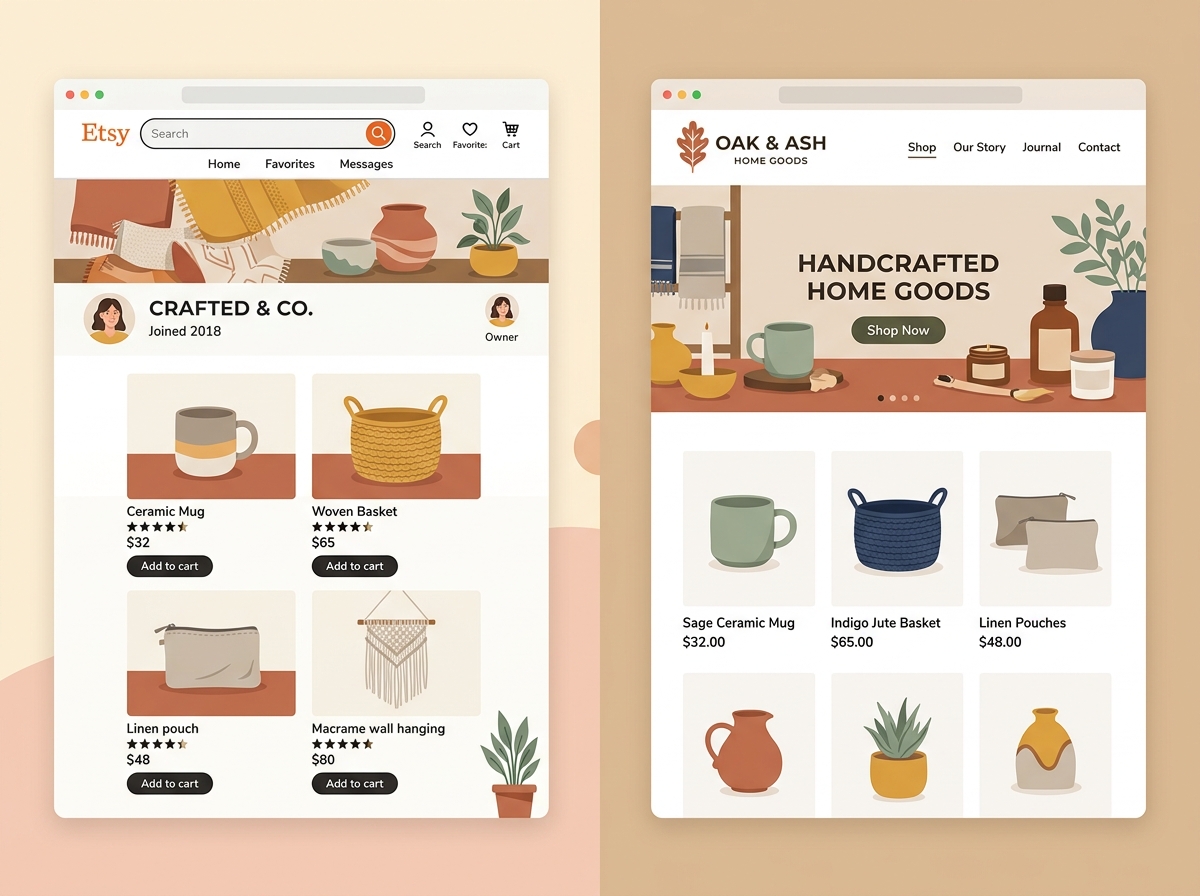
If you’re ready to start selling online, one of the first decisions you’ll face is whether to list on Etsy or build your own website. The etsy vs own website selling debate is one of the most common questions we hear from small business owners and creative entrepreneurs — and honestly, there’s no one-size-fits-all answer. The right choice depends on your goals, your budget, and how much control you want over your brand and customer experience.
In this post, we’ll break down both options clearly so you can make a confident, informed decision for your business.
What Etsy Offers (and Where It Falls Short)
Etsy is a marketplace platform with over 90 million active buyers. If you sell handmade goods, vintage items, or digital downloads, Etsy gives you instant access to a massive, ready-to-buy audience. You don’t need to worry about driving traffic from scratch — the platform does a lot of that heavy lifting for you.
The Advantages of Selling on Etsy
- Built-in traffic: Etsy’s search engine and marketplace bring buyers to you without paid ads.
- Low startup cost: Listing a product costs just $0.20, and you can be up and running in hours.
- Trust factor: Buyers already trust Etsy, which can make first-time purchases easier.
- Simple setup: No technical skills required — just create a shop and start listing.
- Built-in payment processing: Etsy Payments handles transactions across multiple methods.
The Downsides of Etsy
- Fees add up fast: Between listing fees, transaction fees (6.5%), and payment processing fees, you can lose a significant chunk of each sale.
- Limited branding: Your shop lives inside Etsy’s ecosystem. You can’t fully customize the look, feel, or checkout experience.
- You don’t own your audience: Etsy owns the customer relationship. You can’t easily email your buyers or retarget them.
- Algorithm dependency: A change in Etsy’s search algorithm can tank your visibility overnight.
- High competition: You’re competing with thousands of similar sellers on the same platform.
Etsy is a great starting point, but it’s not a long-term brand-building strategy on its own. If you want to grow a recognizable business, you’ll eventually hit a ceiling.
What Your Own Website Offers (and What It Demands)
Building your own e-commerce website — whether through Shopify, WooCommerce, Squarespace, or another platform — gives you complete control over your brand, your customer data, and your revenue. It’s a bigger investment upfront, but the long-term payoff can be significant.
The Advantages of Your Own Website
- Full brand control: Design your store exactly how you want it — colors, fonts, layout, and messaging.
- You own your customer list: Collect emails, run retargeting ads, and build real relationships with buyers.
- Better profit margins: No marketplace transaction fees eating into every sale.
- SEO potential: A well-optimized website can rank on Google and bring in consistent organic traffic over time.
- Scalability: Add products, subscriptions, bundles, or services without platform restrictions.
The Challenges of Running Your Own Store
- You drive your own traffic: No built-in audience means you need SEO, social media, email marketing, or paid ads to attract buyers.
- Higher upfront costs: Hosting, domain, design, and platform fees can range from $30 to $300+ per month depending on your setup.
- More time and effort: Managing a website requires ongoing attention — updates, security, content, and marketing.
- Slower start: Building trust and traffic from scratch takes time, especially if you’re new to digital marketing.
Your own website is a long-term asset. It takes more effort to get going, but it gives you the foundation to build a real, sustainable brand. If you’re serious about growing your business, this is where you want to end up. Check out our guide on e-commerce website design for small businesses to see what’s possible.
Etsy vs Own Website Selling: A Side-by-Side Comparison
Still not sure which direction to go? Here’s a quick comparison to help you weigh your options based on what matters most to your business right now.
| Factor | Etsy | Your Own Website |
|---|---|---|
| Startup Cost | Very Low | Moderate to High |
| Built-in Traffic | Yes | No (you build it) |
| Brand Control | Limited | Full |
| Transaction Fees | 6.5% + more | Low or none |
| Customer Data | Etsy owns it | You own it |
| Long-term Growth | Limited | High |
The Smart Strategy: Use Both (At Least to Start)
Here’s the truth that most guides won’t tell you: you don’t have to choose just one. Many successful sellers start on Etsy to generate early sales and validate their products, then gradually build their own website to take control of their brand and margins. This hybrid approach lets you benefit from Etsy’s traffic while building a long-term asset you actually own.
Once your own website is live and gaining traction, you can shift your focus there — using Etsy as a secondary channel rather than your primary one. Pair your website with a solid SEO strategy for small businesses and you’ll be building traffic that compounds over time, without paying Etsy a cut of every sale.
You can also use automation tools like Make.com to sync your inventory, orders, and customer data between platforms — saving you hours of manual work every week. Learn more about how Make.com automation can streamline your e-commerce operations.
Key Takeaways
- Etsy is ideal for beginners who want low startup costs and access to an existing buyer audience.
- Your own website gives you full control over your brand, customer data, and profit margins.
- Etsy fees can significantly reduce your profits — factor this in before scaling on the platform.
- The smartest approach is often both: use Etsy to start, then build your own store as your business grows.
- Long-term success requires owning your audience — and that means having your own website and email list.
When it comes to etsy vs own website selling, the best platform is the one that aligns with where your business is right now — and where you want it to go. If you’re just starting out, Etsy is a smart, low-risk entry point. But if you’re ready to build something that truly belongs to you, your own website is the move.
Not sure where to start or how to set up an online store that actually converts? We can help. At LetsGetSocialOnline.com, we specialize in building e-commerce websites, crafting SEO strategies, and setting up smart automations that save you time and grow your revenue. Get in touch with our team today and let’s build something great together.