
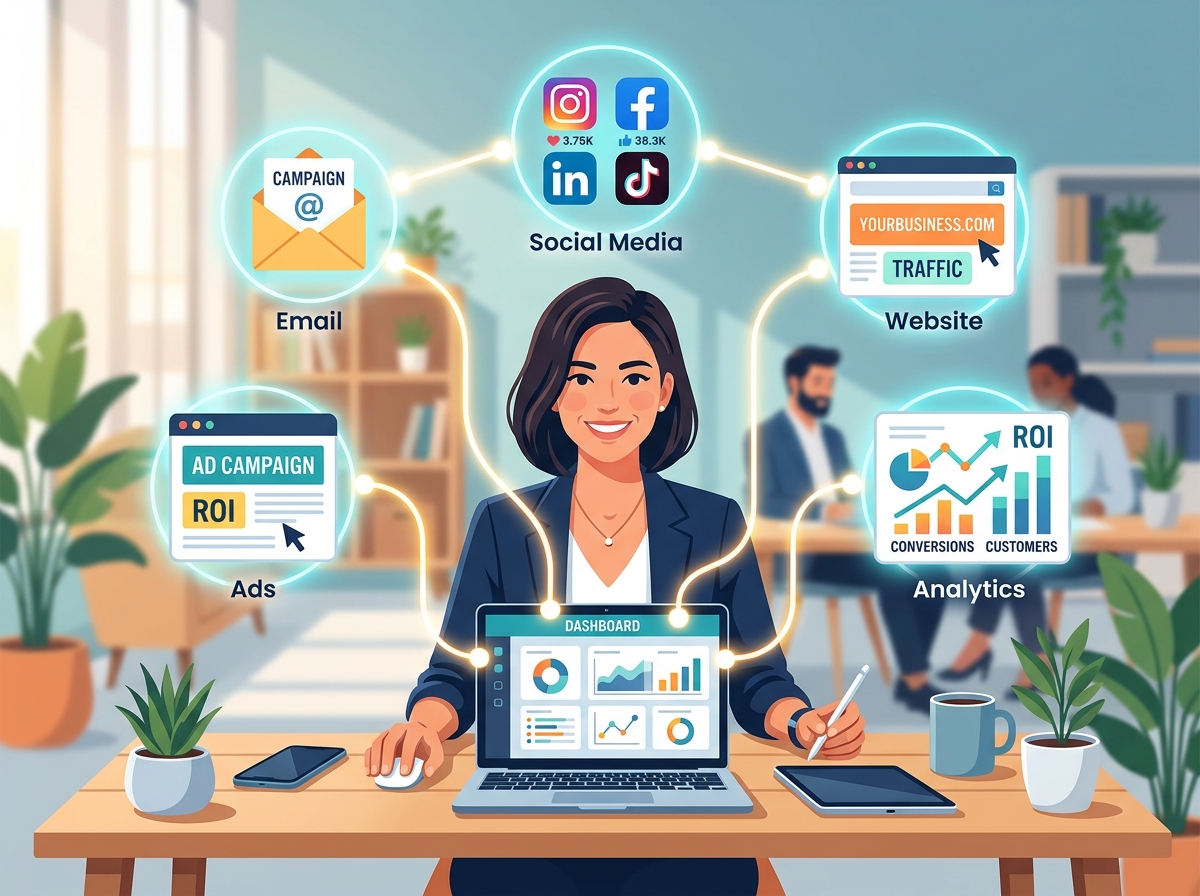
If you’ve ever felt like you need to be on every platform, in every inbox, and at the top of every search result all at once — you’re not imagining things. That pressure is real. But here’s the good news: omnichannel marketing for small business doesn’t have to mean doing everything yourself, all the time, from scratch. It means showing up consistently in the right places, with the right message, in a way that actually works together.
In this post, we’re breaking down what omnichannel marketing really means, why it matters for your business, and how you can build a strategy that keeps you visible without running yourself into the ground.
What Is Omnichannel Marketing (And Why Should You Care)?
Omnichannel marketing is the practice of creating a seamless, connected experience for your customers across every touchpoint — your website, social media, email, ads, and even in-person interactions. Unlike multichannel marketing (where you’re just present on multiple platforms), omnichannel means all those channels work together and tell the same story.
Think about it from your customer’s perspective. They might discover you on Instagram, visit your website, sign up for your email list, and then finally make a purchase after seeing a retargeting ad. If each of those touchpoints feels disconnected or inconsistent, you lose trust — and you lose the sale.
The Difference Between Multichannel and Omnichannel
Multichannel means you’re active on multiple platforms. Omnichannel means those platforms are integrated and consistent. Your brand voice, visuals, offers, and messaging should feel like they’re coming from the same place — because they are.
For small businesses, this is actually a competitive advantage. You don’t need a massive team to pull it off. You just need a smart system.
Why Small Businesses Struggle With Being Everywhere
Let’s be honest — most small business owners wear a lot of hats. You’re the CEO, the content creator, the customer service rep, and the bookkeeper. Trying to maintain a consistent presence across five or six platforms on top of all that? It’s exhausting, and it often leads to one of two outcomes: burnout or abandonment.
The biggest mistake we see is businesses trying to do everything manually without a repeatable system. They post when they remember, send emails when they have time, and update their website when something breaks. That’s not a strategy — that’s survival mode.
The Real Cost of Inconsistency
When your marketing is inconsistent, customers notice — even if they can’t articulate why. A dormant Instagram account, an outdated website, or an email list that only hears from you when you’re selling something all send the same message: this business isn’t reliable. And that perception directly impacts your revenue.
The solution isn’t to do more. It’s to do things smarter and more systematically. That’s where a real omnichannel strategy comes in. You can also explore how social media management services can take the daily posting pressure off your plate entirely.
How to Build an Omnichannel Strategy Without Burning Out
Here’s the practical part. Building an effective omnichannel marketing small business strategy doesn’t require a huge budget or a full marketing department. It requires clarity, consistency, and the right tools.
Step 1: Start With Your Core Message
Before you worry about which platforms to use, get crystal clear on your brand message. What do you do, who do you help, and why does it matter? This core message should be the foundation of everything you publish — from your Instagram captions to your email subject lines to your Google Business profile.
Step 2: Choose Your Primary Channels Strategically
You don’t need to be on every platform. You need to be on the platforms where your ideal customers actually spend time. For most small businesses, that’s a combination of:
- A well-optimized website (your home base)
- One or two social media platforms where your audience is active
- An email list (this one is non-negotiable)
- Google Business Profile for local visibility
Once you’ve nailed those, you can expand. But trying to master six platforms at once is a recipe for mediocre results everywhere.
Step 3: Repurpose Content Across Channels
This is the secret weapon of every smart marketer. Create once, distribute everywhere. Write a blog post, then turn it into a social media carousel, an email newsletter, a short video script, and a few story slides. One piece of content becomes five — without five times the effort.
Tools like Make.com automation can help you set up workflows that automatically share your content across platforms the moment it’s published, saving you hours every week.
Step 4: Use Automation to Stay Consistent
Consistency is the backbone of any successful omnichannel marketing for small business approach. But consistency doesn’t mean you have to be glued to your phone 24/7. Scheduling tools, email sequences, and automation platforms let you show up reliably — even when you’re focused on running your business.
Set up automated welcome sequences for new email subscribers. Schedule your social posts a week or two in advance. Use chatbots to handle common customer questions. These systems work while you sleep.
Measuring What’s Actually Working
An omnichannel strategy only improves if you’re paying attention to the data. You don’t need to track every metric — just the ones that tell you whether people are moving through your customer journey.
- Website traffic and source: Where are your visitors coming from?
- Email open and click rates: Is your audience engaging with your content?
- Social media reach and saves: Are people finding your content valuable enough to save or share?
- Conversion rate: Are visitors turning into leads or customers?
- Customer lifetime value: Are your omnichannel efforts building loyalty over time?
Review these numbers monthly and adjust your strategy based on what’s working. If a platform isn’t driving results after 90 days of consistent effort, it’s okay to deprioritize it. You can also learn more about how SEO services can help drive consistent organic traffic as part of your broader strategy.
Key Takeaways
- Omnichannel marketing means creating a connected, consistent experience across all your customer touchpoints — not just being present on multiple platforms.
- You don’t need to be everywhere at once. Focus on the channels where your ideal customers actually are, and do those well.
- Repurposing content is one of the most efficient ways to maintain an omnichannel presence without burning out your team or budget.
- Automation tools like Make.com can help you stay consistent across platforms without manual effort every single day.
- Track the metrics that matter to your customer journey and adjust your strategy regularly based on real data.
Ready to Show Up Everywhere — Without the Overwhelm?
Building a smart omnichannel marketing small business strategy is one of the best investments you can make in your brand’s long-term growth. When your messaging is consistent, your systems are automated, and your content is working across multiple channels, you stop chasing customers — and start attracting them.
You don’t have to figure this out alone. At LetsGetSocialOnline.com, we help small businesses and entrepreneurs build marketing systems that actually work — from social media management and SEO to automation and web design. Let’s build something that works for you, not the other way around.
Book a free strategy call today and let’s map out an omnichannel approach that fits your business, your budget, and your goals.