
If you’ve ever stared at your bank account wondering where to put your next marketing dollar, you’re not alone. Marketing budget allocation is one of the most common challenges small business owners face — and getting it wrong can mean wasted money, missed opportunities, and slow growth. The good news? You don’t need a Fortune 500 budget to market effectively. You just need a smart plan.
In this guide, we’ll walk you through exactly how to divide your marketing dollars so every cent works harder for your business. Whether you’re just starting out or looking to scale, these strategies will help you spend with confidence.
Why Marketing Budget Allocation Matters More Than You Think
Many small business owners either spend too much on one channel or spread their budget so thin that nothing gets traction. Both approaches lead to the same result: poor ROI and frustration. A thoughtful marketing budget allocation strategy gives your efforts focus and makes it easier to measure what’s actually working.
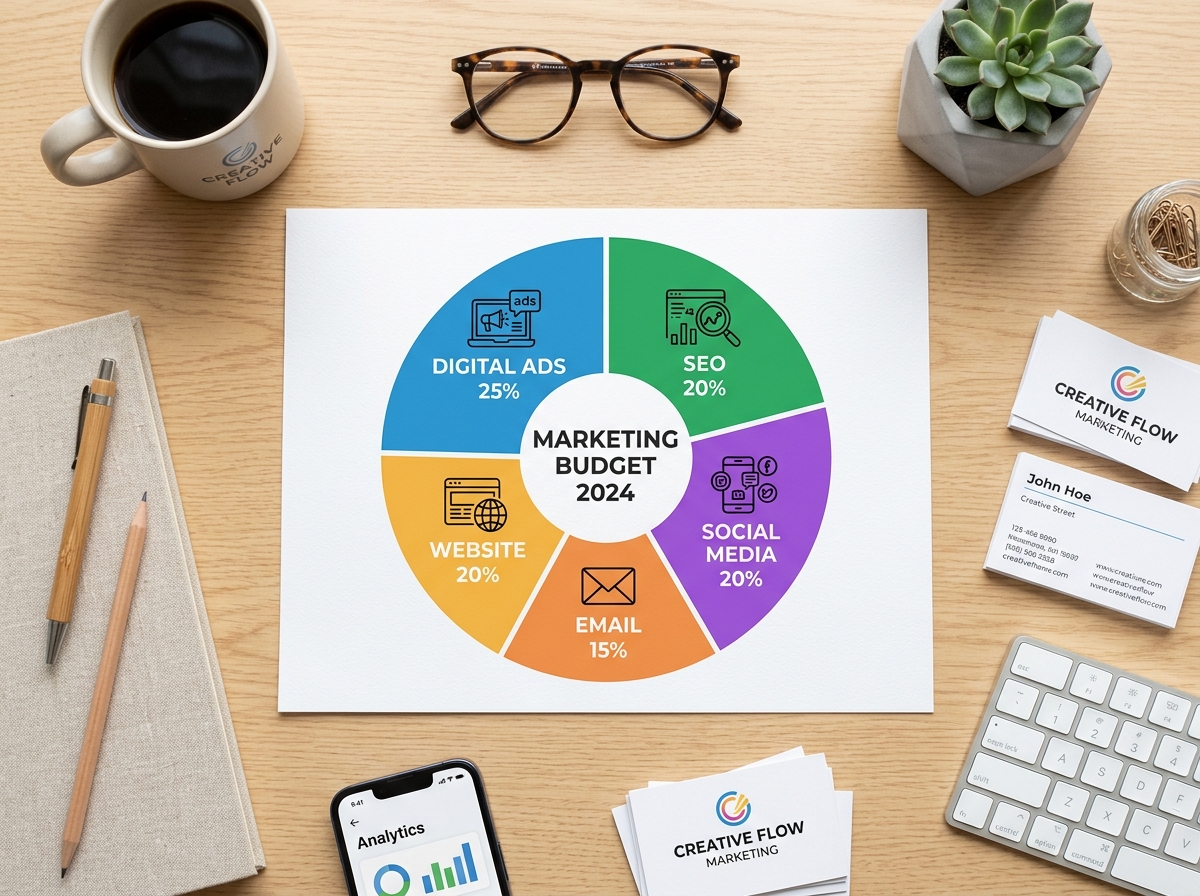
Think of your marketing budget like a pie. Every slice represents a channel — social media, SEO, paid ads, email marketing, and more. The goal isn’t to cut equal slices. It’s to give the biggest slices to the channels that deliver the most value for your specific business.
The 5% to 10% Rule
A widely accepted benchmark is to allocate 5% to 10% of your gross revenue toward marketing. If you’re in a competitive industry or trying to grow aggressively, lean toward the higher end. If you’re in a stable niche with strong word-of-mouth, 5% may be plenty. The key is consistency — marketing works best when it’s ongoing, not sporadic.
Know Your Goals Before You Spend
Before you allocate a single dollar, get clear on your goals. Are you trying to build brand awareness? Generate leads? Drive e-commerce sales? Each goal requires a different mix of channels and tactics. Without clarity here, you’ll end up chasing shiny objects instead of results.
How to Break Down Your Marketing Budget by Channel
There’s no one-size-fits-all formula, but here’s a practical starting framework for small businesses that want to cover their bases without overextending. Adjust these percentages based on your industry, audience, and goals.
Digital Advertising (25–35%)
Paid ads — whether on Google, Facebook, or Instagram — can deliver fast results when done right. This is often where businesses see the most immediate return, especially for lead generation and product sales. Start small, test your messaging, and scale what works. Don’t pour money into ads before you’ve validated your offer.
SEO and Content Marketing (20–25%)
Search engine optimization is a long-term investment that pays dividends for years. Creating helpful blog content, optimizing your website, and building backlinks all contribute to organic traffic that doesn’t cost you per click. If you’re not investing in SEO, you’re leaving free traffic on the table. Check out our SEO tips for small businesses to get started.
Social Media Marketing (15–20%)
Social media is where your audience hangs out — and where your brand personality can shine. Budget for both organic content creation and paid social promotion. Tools and scheduling platforms can help you stay consistent without burning out. Learn more about how we approach social media management for small businesses.
Email Marketing (10–15%)
Email remains one of the highest-ROI channels in digital marketing, with an average return of $36 for every $1 spent. Budget for an email platform, list-building tools, and occasional copywriting support. If you’re not building an email list, start today — it’s an asset you own completely.
Website and Design (10–15%)
Your website is your digital storefront. A slow, outdated, or confusing site will kill your conversions no matter how good your ads are. Allocate budget for regular updates, landing page optimization, and any redesign work needed to keep your site performing at its best.
Experimentation and New Channels (5–10%)
Reserve a small slice of your budget for testing new ideas — a new platform, a video campaign, an influencer partnership. This is how you discover your next big growth channel before your competitors do. Keep it small and treat it like an investment in learning.
Common Marketing Budget Mistakes to Avoid
Even with a solid plan, it’s easy to fall into traps that drain your budget without delivering results. Here are the most common mistakes small business owners make — and how to avoid them.
- Spending without tracking: If you’re not measuring results, you’re guessing. Set up Google Analytics, track your ad conversions, and review your numbers monthly.
- Going all-in on one channel: Diversification protects you. If one platform changes its algorithm or raises ad costs, you’ll still have other channels driving traffic.
- Cutting marketing during slow periods: This is the opposite of what you should do. Slow periods are when you need visibility most.
- Ignoring automation: Tools like Make.com can automate repetitive marketing tasks, saving you time and money. Explore our Make.com automation services to see how it works.
- Skipping the strategy: Tactics without strategy is just noise. Always connect your spending back to a clear business goal.
How to Review and Adjust Your Budget Over Time
Your marketing budget allocation isn’t set in stone. It should evolve as your business grows and as you gather more data. Set a quarterly review cadence where you look at what’s performing, what’s underperforming, and where you should shift resources.
Ask yourself these questions during each review:
- Which channels are driving the most leads or sales?
- What’s my cost per acquisition on each channel?
- Are there any channels I’m funding out of habit rather than results?
- What new opportunities should I test this quarter?
Data-driven decisions will always outperform gut feelings when it comes to budget planning. The more consistently you review and adjust, the more efficient your spending becomes over time.
Key Takeaways
- Allocate 5–10% of gross revenue to marketing and adjust based on your growth goals.
- Spread your budget across multiple channels — digital ads, SEO, social media, email, and your website.
- Always tie your spending to specific, measurable business goals.
- Review your marketing budget allocation quarterly and shift resources toward what’s working.
- Use automation tools to reduce manual work and stretch your budget further.
Smart marketing budget allocation isn’t about spending more — it’s about spending smarter. With the right strategy in place, even a modest budget can generate serious results for your small business.
Ready to build a marketing strategy that actually fits your budget and your goals? Get in touch with our team at LetsGetSocialOnline.com — we’d love to help you create a plan that works for your business.