
How to A/B Test Your Marketing Campaigns for Maximum Results
If you’ve ever wondered why some marketing campaigns crush it while others fall flat, the answer often comes down to testing. A/B testing marketing campaigns is one of the most powerful strategies available to business owners and digital marketers today. Instead of guessing what your audience wants, you let real data guide your decisions — and the results can be transformative. In this guide, we’ll walk you through exactly how to run effective A/B tests, what to test, and how to use your findings to grow your business.
What Is A/B Testing in Marketing?
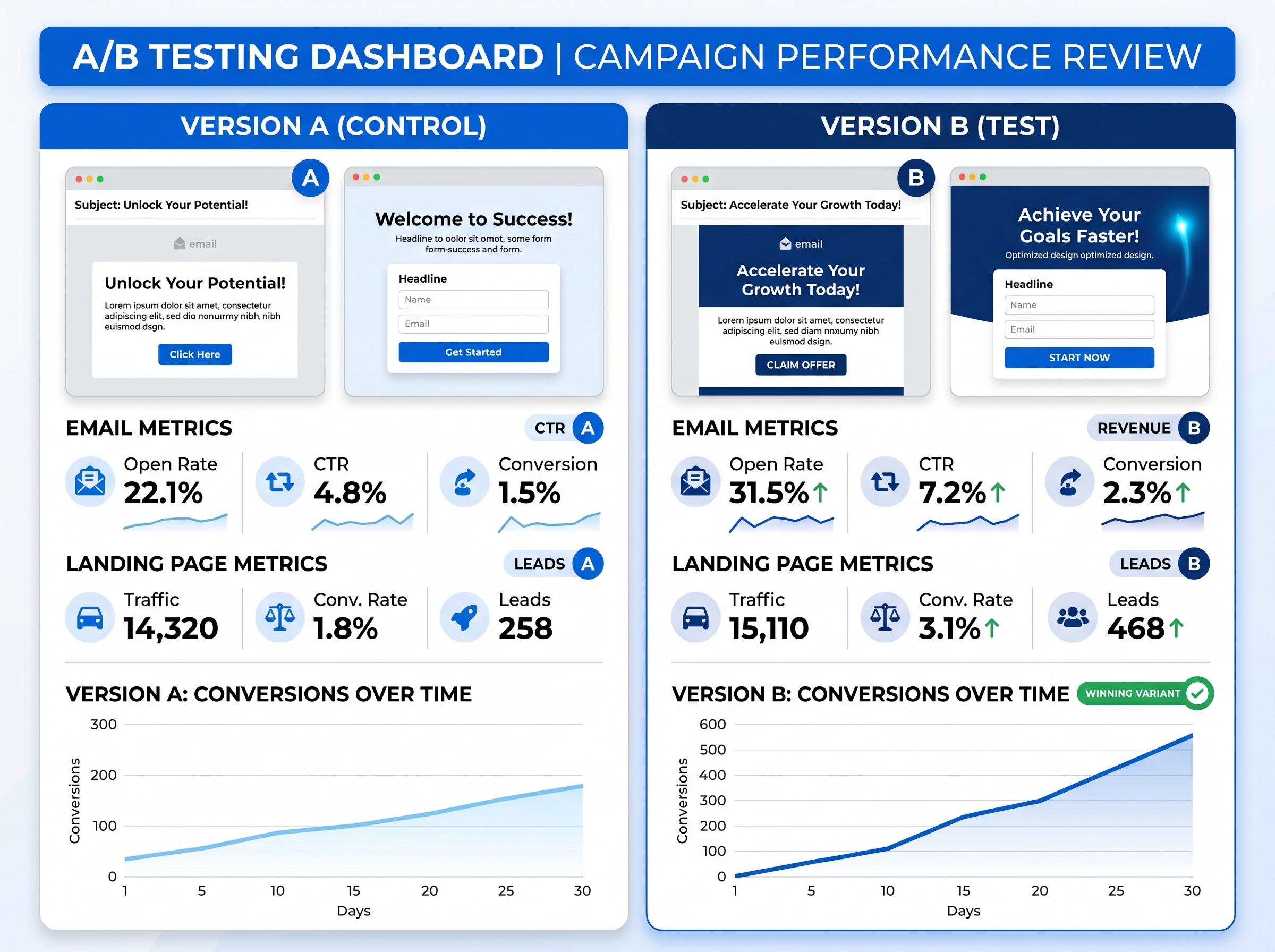
A/B testing, also known as split testing, is the process of comparing two versions of a marketing asset — such as an email, ad, or landing page — to determine which one performs better. You show version A to one segment of your audience and version B to another, then measure which version achieves your desired outcome, whether that’s more clicks, sign-ups, purchases, or engagement.
The beauty of A/B testing marketing is its simplicity. You change one variable at a time, measure the results, and make informed decisions based on actual user behavior rather than assumptions or gut feelings.
Why A/B Testing Matters for Your Business
Many businesses pour money into marketing campaigns without ever knowing what’s truly working. A/B testing removes the guesswork and gives you a competitive edge. Here’s why it should be a core part of your marketing strategy:
- Increase conversions: Even small improvements in click-through or conversion rates can lead to significant revenue gains over time.
- Reduce wasted spend: Stop investing in underperforming creatives, copy, or targeting strategies.
- Understand your audience better: Learn what messaging, visuals, and offers resonate most with your customers.
- Make data-driven decisions: Replace opinions with evidence and build a culture of continuous improvement.
- Improve ROI: Optimized campaigns deliver more results for the same budget.
What Should You A/B Test First?
One of the most common questions marketers ask is: ” Where do I start? The answer depends on your current goals, but here are the highest-impact areas to focus on when beginning your A/B testing marketing journey.
1. Email Subject Lines
Your subject line determines whether your email gets opened or ignored. Test different tones (curiosity vs. urgency), lengths (short vs. descriptive), and personalization (with vs. without the recipient’s name). Even a 5% improvement in open rates can dramatically increase your campaign’s overall performance.
2. Landing Page Headlines
Your headline is the first thing visitors see. Test benefit-driven headlines against feature-focused ones, or try different emotional triggers. A compelling headline can be the difference between a bounce and a conversion.
3. Call-to-Action (CTA) Buttons
The wording, color, size, and placement of your CTA button all affect click-through rates. Try “Get Started Free” versus “Start My Free Trial,” or test a green button against an orange one. These small changes can yield surprisingly big results.
4. Ad Creative and Copy
For paid social and search campaigns, test different images, video thumbnails, ad copy angles, and value propositions. Identify which creative combinations drive the lowest cost per click and the highest conversion rate.
5. Pricing and Offer Presentation
How you present your pricing or offer can significantly impact purchase decisions. Test monthly vs. annual pricing displays, discount framing (“Save $50” vs. “20% Off”), or bundled offers versus individual products.
How to Run an Effective A/B Test: Step-by-Step
Running a successful A/B testing marketing experiment requires structure and discipline. Follow these steps to ensure your results are reliable and actionable.
Step 1: Define Your Goal
Start with a clear, measurable objective. Are you trying to increase email open rates, boost landing page conversions, or lower your cost per acquisition? Your goal will determine what you test and how you measure success.
Step 2: Form a Hypothesis
A good hypothesis follows this format: “If I change [X], then [Y] will improve because [Z].” For example: “If I change the CTA from ‘Learn More’ to ‘Get My Free Guide,’ then click-through rates will increase because it’s more specific and value-focused.”
Step 3: Create Your Variants
Build your control (version A) and your challenger (version B). Change only one element at a time so you can accurately attribute any difference in performance to that specific change.
Step 4: Determine Your Sample Size and Duration
For statistically significant results, you need a large enough audience and enough time. Avoid ending tests too early — premature conclusions are one of the biggest mistakes in split testing. Use a sample size calculator to determine how many visitors or recipients you need before concluding.
Step 5: Run the Test and Collect Data
Launch both versions simultaneously to the same type of audience. Use tools like Google Optimize, Optimizely, Mailchimp, or your ad platform’s built-in testing features to manage and track your experiment.
Step 6: Analyze Results and Implement Learnings
Once you’ve reached statistical significance (typically 95% confidence), analyze the results. Implement the winning version and document your learnings. Then start the process again — A/B testing marketing is an ongoing cycle, not a one-time event.
Common A/B Testing Mistakes to Avoid
- Testing too many variables at once: This makes it impossible to know what caused the change in performance.
- Ending tests too early: Patience is key. Wait for statistical significance before declaring a winner.
- Ignoring external factors: Seasonality, news events, or platform algorithm changes can skew your results.
- Not documenting results: Keep a testing log so your team can build on past learnings over time.
- Testing insignificant elements: Focus on high-impact variables that are most likely to move the needle.
Tools to Help You Get Started
You don’t need a massive budget to start A/B testing marketing campaigns. Here are some beginner-friendly tools to consider:
- Google Optimize – Free tool for website and landing page testing
- Mailchimp – Built-in A/B testing for email campaigns
- Facebook Ads Manager – Native split testing for paid social campaigns
- Optimizely – Advanced experimentation platform for growing teams
- VWO (Visual Website Optimizer) – Comprehensive CRO and testing platform
Start Testing, Start Growing
The most successful marketers and business owners don’t rely on luck — they rely on data. By incorporating A/B testing marketing into your regular workflow, you’ll continuously improve your campaigns, better understand your audience, and maximize every dollar you invest in marketing.
Remember, every test — whether it wins or loses — teaches you something valuable. The key is to stay consistent, stay curious, and never stop optimizing.
Ready to take your marketing campaigns to the next level? Contact our team today to learn how we can help you build a data-driven marketing strategy that delivers real, measurable results. Or explore our digital marketing tips blog for more actionable strategies to grow your business.