
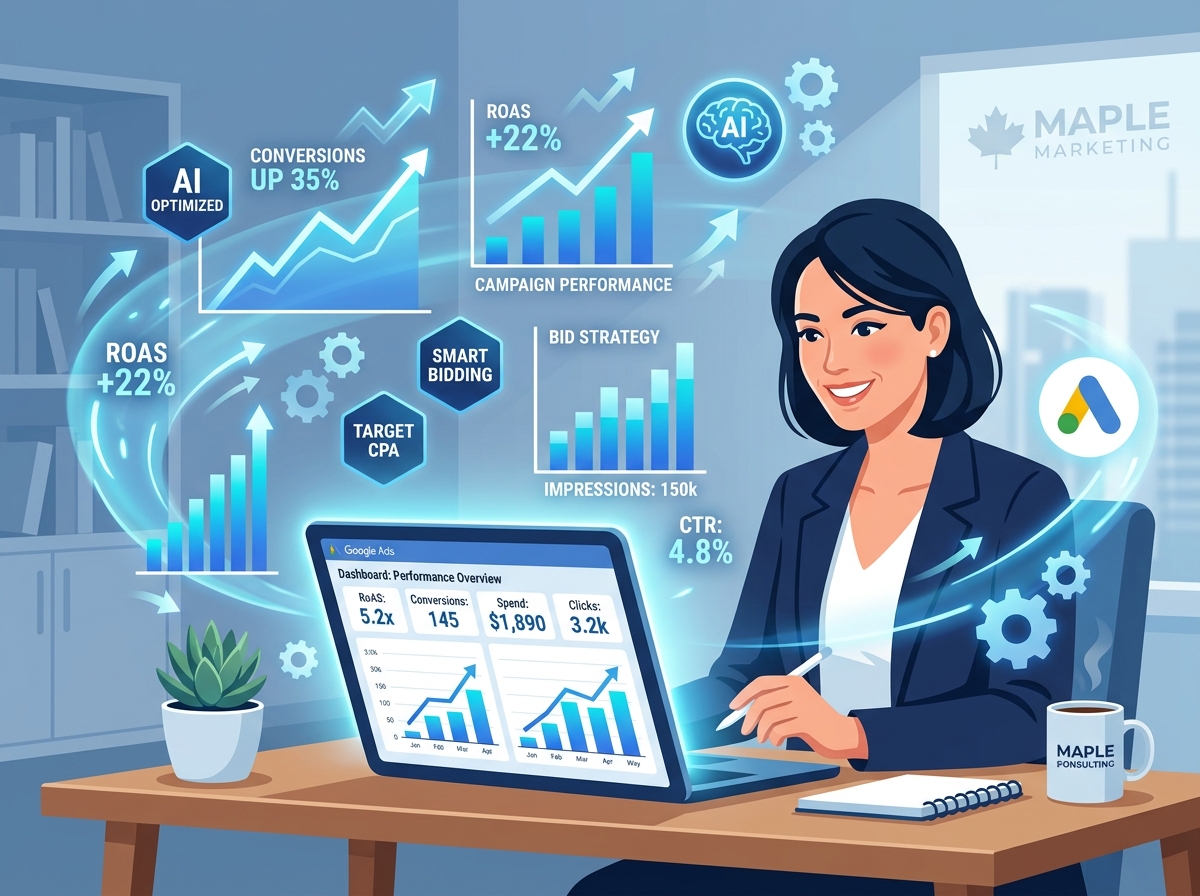
If you’ve ever felt like managing Google Ads is a full-time job, you’re not alone. Between adjusting bids, testing ad copy, and analyzing performance data, it can quickly become overwhelming — especially if you’re running a small business. That’s where AI Google Ads optimization comes in. These smart tools take the heavy lifting off your plate, automatically improving your campaigns so you can focus on what you do best: running your business.
In this post, we’ll break down how AI is changing the Google Ads game, which tools are worth your attention, and how to start using them to get more from every dollar you spend on paid advertising.
Why AI Is Changing the Way We Run Google Ads
Traditional Google Ads management relies heavily on manual work — reviewing data, tweaking bids, pausing underperforming keywords, and writing new ad variations. For a seasoned PPC specialist, this is second nature. But for most business owners, it’s a time-consuming puzzle with a lot of moving parts.
AI changes that equation entirely. Machine learning algorithms can process thousands of data points in real time — things like user behavior, device type, time of day, location, and search intent — and make instant adjustments that no human could keep up with manually. The result? Smarter spending, better targeting, and higher returns without the constant babysitting.
What AI Actually Does in Your Campaigns
When we talk about AI in Google Ads, we’re referring to a range of automated functions that work behind the scenes. These include:
- Smart Bidding: Automatically adjusts your bids in real time based on the likelihood of a conversion.
- Responsive Search Ads (RSAs): Google’s AI tests different combinations of your headlines and descriptions to find what performs best.
- Audience targeting: AI identifies patterns in who’s converting and expands your reach to similar users.
- Performance Max campaigns: A fully automated campaign type that uses AI to serve ads across all of Google’s channels.
- Automated ad scheduling: Runs your ads when your audience is most likely to take action.
These features are built directly into Google Ads, but there are also third-party tools that take AI Google Ads optimization even further.
Top AI Tools for Google Ads Optimization
Google’s native AI features are a great starting point, but if you want more control, transparency, and advanced automation, these third-party platforms are worth exploring.
1. Google’s Smart Campaigns and Performance Max
If you’re just getting started, Google’s own Smart Campaigns are designed for small businesses with limited time and budget. You provide some basic information about your business and goals, and Google’s AI handles the rest — from keyword selection to ad placement. Performance Max takes this further by running across Search, Display, YouTube, Gmail, and Maps simultaneously, optimizing in real time for your conversion goals.
2. Optmyzr
Optmyzr is a powerful PPC management platform that uses AI to surface actionable recommendations for your campaigns. It can automate bid adjustments, flag budget issues, and even generate reports — all in a user-friendly dashboard. It’s a favorite among digital marketing agencies and in-house teams who want AI assistance without losing control of their strategy.
3. Adalysis
Adalysis specializes in ad testing and performance analysis. Its AI continuously monitors your ads and alerts you when something needs attention — like an underperforming ad group or a keyword that’s draining your budget. It’s especially useful for businesses running multiple campaigns who need a smarter way to stay on top of performance.
4. WordStream
WordStream offers a suite of tools designed specifically for small business advertisers. Its AI-powered “20-Minute Work Week” feature analyzes your account and gives you a prioritized list of improvements to make — so even if you only have a few minutes a week, you’re always moving in the right direction.
Want to see how these tools fit into a broader digital marketing strategy? Check out our guide on AI tools for small business growth and learn how to build a smarter marketing stack from the ground up.
How to Get Started with AI Google Ads Optimization
You don’t need to be a tech wizard to start benefiting from AI in your Google Ads campaigns. Here’s a simple approach to get moving in the right direction.
Step 1: Set Clear Conversion Goals
AI is only as smart as the goals you give it. Before enabling any automated features, make sure your conversion tracking is set up correctly in Google Ads. Whether your goal is phone calls, form submissions, or online purchases, the AI needs accurate data to optimize toward the right outcomes.
Step 2: Start with Smart Bidding
If you’re new to AI-powered ads, start by switching from manual CPC bidding to a Smart Bidding strategy like Target CPA (cost per acquisition) or Target ROAS (return on ad spend). These strategies use machine learning to automatically set bids for each auction, helping you get more conversions at your desired cost.
Step 3: Use Responsive Search Ads
Replace your old static ads with Responsive Search Ads. Provide Google with 10–15 headlines and 4 descriptions, and let the AI figure out which combinations resonate most with your audience. Over time, this leads to higher click-through rates and better Quality Scores — which means lower costs per click.
Step 4: Monitor, Don’t Micromanage
One of the biggest mistakes business owners make is constantly overriding AI decisions before the algorithm has enough data to learn. Give your campaigns at least 2–4 weeks to gather data before making major changes. Check in regularly, but trust the process. You can also explore how Make.com automation can help you streamline your reporting and campaign monitoring workflows.
Is AI Google Ads Optimization Right for Your Business?
The short answer: yes — especially if you’re a small business owner who doesn’t have hours to spend managing ad campaigns every week. AI Google Ads optimization levels the playing field, giving you access to the same sophisticated targeting and bidding strategies that large brands use, without needing a dedicated PPC team.
That said, AI works best when it’s guided by a clear strategy. Knowing your audience, your goals, and your budget still matters. AI handles the execution — but the vision has to come from you. If you’re unsure where to start, working with a digital marketing partner can help you set up your campaigns the right way from day one. Learn more about how we approach Google Ads management for small businesses at LetsGetSocialOnline.com.
Key Takeaways
- AI Google Ads optimization automates bidding, targeting, and ad testing — saving you time and reducing wasted spend.
- Google’s built-in tools like Smart Bidding, RSAs, and Performance Max are great starting points for small businesses.
- Third-party tools like Optmyzr, Adalysis, and WordStream offer deeper insights and more control over your automation.
- Always set up proper conversion tracking before enabling AI features — garbage in, garbage out.
- Give AI campaigns time to learn before making major changes; patience leads to better long-term performance.
Ready to stop guessing and start growing? Our team at LetsGetSocialOnline.com specializes in helping small businesses get real results from Google Ads — with the power of AI working in your corner. Get in touch with us today and let’s build a smarter ad strategy for your business.