
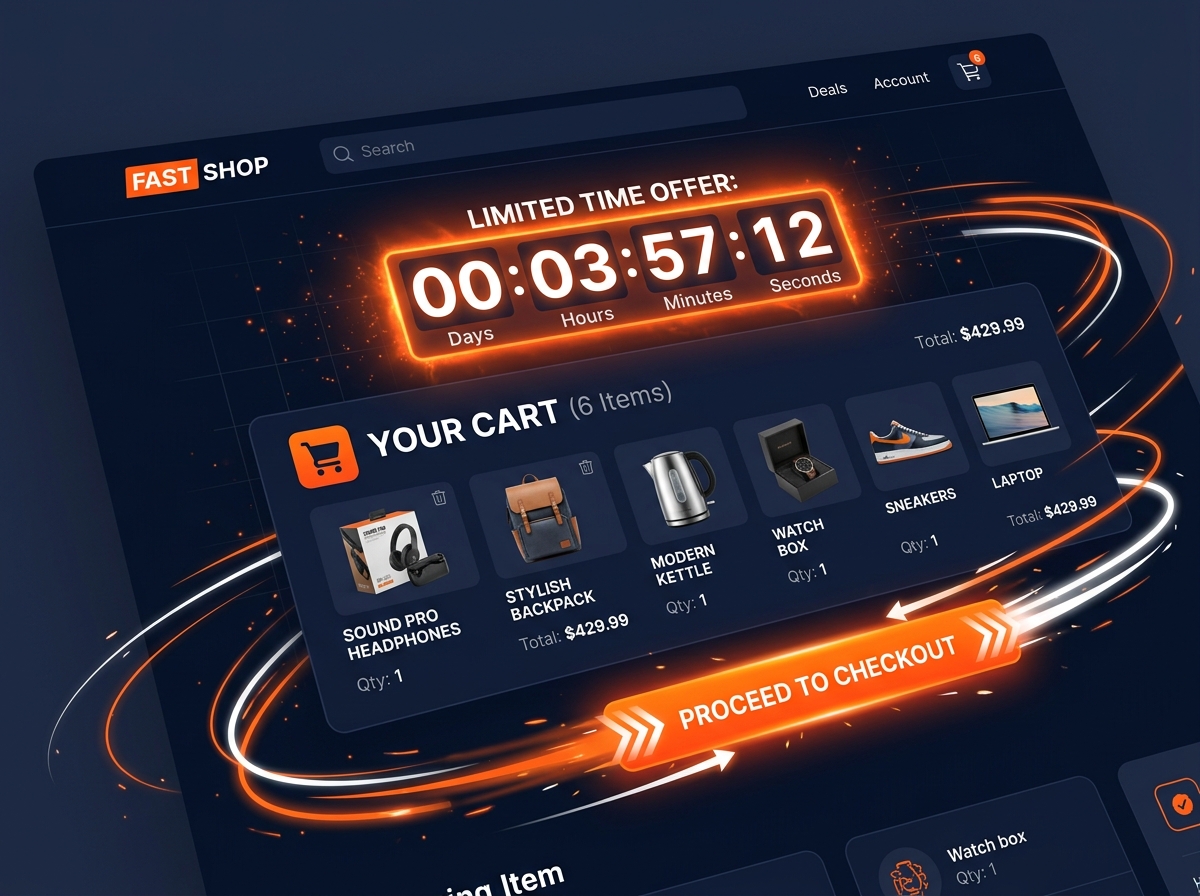
If you’ve ever refreshed a product page just because a countdown timer was ticking down, you already understand the power of urgency. A well-executed flash sale strategy ecommerce businesses can rely on doesn’t just move inventory — it creates excitement, builds brand loyalty, and drives serious revenue in a short window of time. But there’s a big difference between a flash sale that converts and one that gets ignored. Let’s break down exactly how to do it right.
Why Flash Sales Work (When Done Correctly)
Flash sales tap into a fundamental human behavior: the fear of missing out. When people believe an opportunity is limited — whether by time, quantity, or availability — they’re far more likely to act quickly rather than delay. This psychological trigger is one of the most powerful tools in your ecommerce marketing toolkit.
However, urgency only works when it feels genuine. Customers today are savvy. If you run a “24-hour flash sale” every single week, the urgency disappears and your brand credibility takes a hit. The key is to use flash sales strategically — not as a crutch, but as a calculated growth lever.
The Psychology Behind Urgency
Scarcity and time pressure activate the brain’s loss aversion response. People are more motivated to avoid losing something than they are to gain something of equal value. When your flash sale communicates “only 10 left” or “sale ends in 3 hours,” you’re speaking directly to that instinct.
Pair that with a clear value proposition — a genuine discount, a bundle deal, or exclusive access — and you’ve got a recipe for high-converting campaigns that feel exciting rather than pushy.
How to Build a Flash Sale Strategy That Actually Converts
A successful flash sale strategy ecommerce plan starts long before you hit publish. The preparation phase is where most businesses either win or lose. Here’s how to set yourself up for success.
1. Choose the Right Products
Not every product belongs in a flash sale. Focus on items that are high-demand, have healthy margins, or need to move quickly due to overstock. You can also use flash sales to introduce new products and generate buzz around a launch.
- High-margin products — You can afford to discount without hurting profitability
- Seasonal or trending items — Capitalize on what’s already top of mind
- Slow-moving inventory — Clear stock while creating perceived value
- Exclusive bundles — Offer combinations only available during the sale
2. Set a Clear Time Window
The shorter the sale, the stronger the urgency. Most high-performing flash sales run between 4 and 24 hours. Going beyond 48 hours dilutes the urgency effect significantly. Pick a window that gives your audience enough time to see the offer but not so much time that they procrastinate.
Consider your audience’s behavior patterns. If most of your traffic comes in the evening, launch your sale at 6 PM so the peak urgency window aligns with when your customers are most active and ready to buy.
3. Build Anticipation Before the Sale
Don’t just drop a flash sale out of nowhere. Tease it. Send a “something big is coming” email 24–48 hours in advance. Post countdown content on social media. Create a sense of event around your sale so customers are primed and ready when it goes live.
This pre-sale buzz is often what separates a mediocre flash sale from a record-breaking one. You want your audience to already have their wallets ready before the sale even starts. Need help with your email and social strategy? Check out our guide on social media marketing tips for small businesses.
Promoting Your Flash Sale for Maximum Reach
Even the best flash sale strategy ecommerce plan will fall flat without strong promotion. You need to hit your audience across multiple channels — and you need to do it fast.
Email Marketing: Your Most Powerful Channel
Email consistently outperforms every other channel for flash sale conversions. Send a launch email the moment your sale goes live, a mid-sale reminder highlighting top deals, and a final “last chance” email 1–2 hours before it ends. That three-email sequence alone can dramatically increase your revenue per campaign.
Use subject lines that communicate urgency clearly: “⏰ 6 Hours Left — 40% Off Ends Tonight” performs far better than a generic “Check Out Our Sale.” Personalization and specificity are your best friends here.
Social Media and Paid Ads
Organic social posts work well for warming up your existing audience, but paid ads are what scale your flash sale beyond your current followers. Run retargeting ads to people who’ve visited your site recently — they’re already warm leads and much more likely to convert during a limited-time offer.
Short-form video content on Instagram Reels or TikTok showing the products on sale can drive massive engagement during a flash sale window. Keep it authentic, fast-paced, and focused on the deal. For a deeper dive into paid social, explore our post on ecommerce social media advertising strategies.
Automate Your Flash Sale Workflow
Running a flash sale manually is stressful and error-prone. Use automation tools to schedule emails, trigger notifications, and update inventory counts in real time. Platforms like Make.com can connect your ecommerce store, email platform, and social channels so everything runs like clockwork without you being glued to your screen. Learn more about how Make.com automation can simplify your ecommerce operations.
Common Flash Sale Mistakes to Avoid
Even experienced ecommerce businesses make avoidable mistakes that kill their flash sale results. Here’s what to watch out for:
- Running sales too frequently — Customers will wait for the next one instead of buying now
- Unclear discount messaging — Make the value obvious; don’t make people do math
- Slow website performance — A traffic spike during a flash sale can crash an unprepared site
- No mobile optimization — Most buyers will see your sale on their phone first
- Forgetting post-sale follow-up — Email buyers after the sale to nurture loyalty and repeat purchases
Key Takeaways
- A strong flash sale strategy ecommerce plan relies on genuine urgency — not manufactured pressure
- Choose products strategically: high-margin, trending, or inventory you need to move
- Keep your sale window short (4–24 hours) to maximize the urgency effect
- Build anticipation before the sale and promote across email, social, and paid ads
- Use automation tools to reduce manual work and ensure a seamless customer experience
A well-planned flash sale strategy ecommerce approach can be one of the highest-ROI campaigns in your marketing calendar — but only when it’s executed with intention. Focus on real value, smart timing, and multi-channel promotion, and you’ll create the kind of urgency that actually gets people to buy.
Ready to build a flash sale strategy that drives real results for your online store? Get in touch with our team at LetsGetSocialOnline.com and let’s create a campaign that converts.