
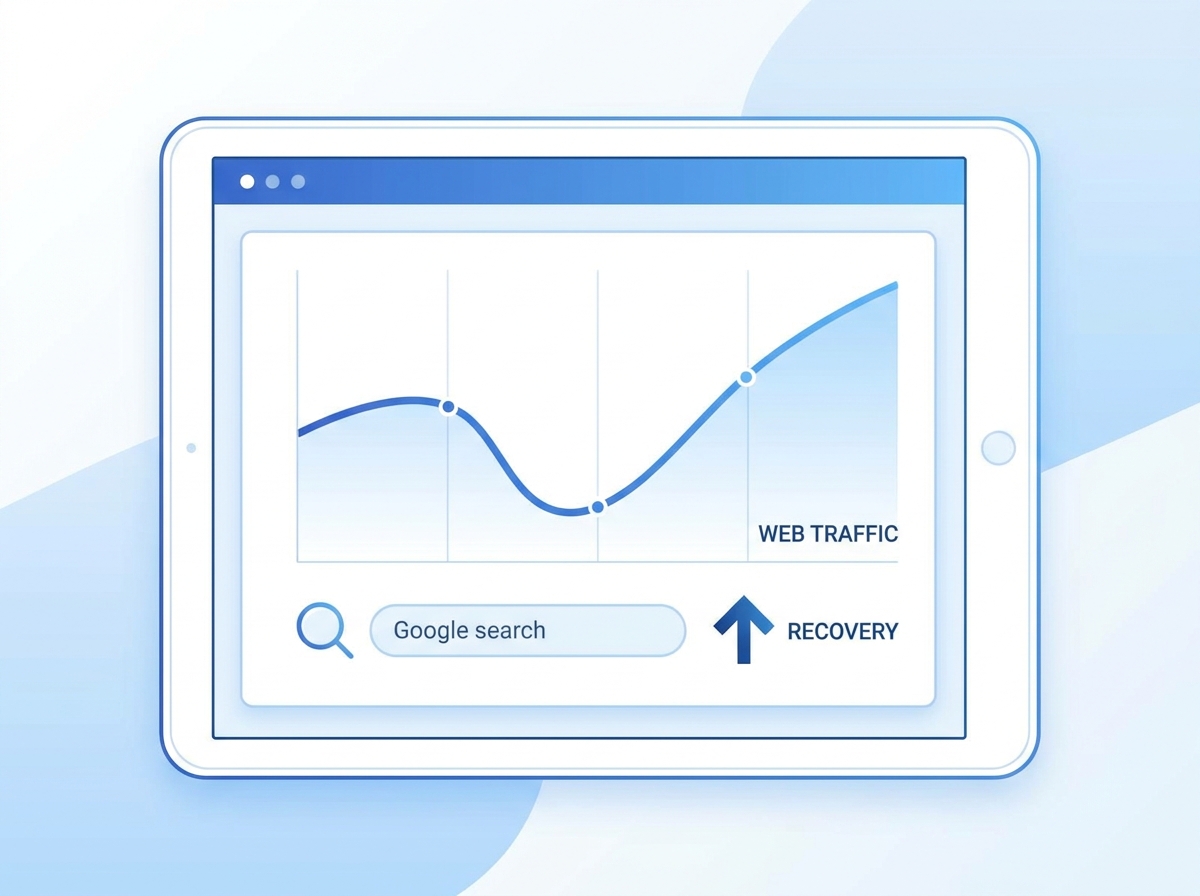
If you’ve ever woken up to find your website traffic has dropped overnight, you know the panic that sets in. A Google algorithm update can shake up search rankings in a matter of hours — and if your site gets caught in the crossfire, it can feel like the rug has been pulled out from under your entire marketing strategy. The good news? Google algorithm update recovery is absolutely possible, and with the right approach, you can not only bounce back but come out stronger than before.
In this guide, we’ll walk you through exactly what to do when a Google update hits your site, how to diagnose the damage, and the steps you can take to rebuild your rankings with confidence.
What Is a Google Algorithm Update and Why Does It Matter?
Google regularly updates its search algorithm to improve the quality of results it delivers to users. Some updates are minor tweaks that happen quietly in the background. Others — like Core Updates, the Helpful Content Update, or the Spam Update — are major changes that can significantly impact where your website ranks in search results.
When a big update rolls out, websites that don’t align with Google’s evolving quality standards can see dramatic drops in organic traffic. This doesn’t necessarily mean you’ve done anything wrong — sometimes it’s simply a shift in what Google considers “most helpful” for a given search query.
How to Tell If a Google Update Affected Your Site
- A sudden, unexplained drop in organic traffic (check Google Analytics or Search Console)
- Rankings for key pages falling off the first page or disappearing entirely
- The timing of the drop aligns with a confirmed Google update (check Google’s update history)
- Specific types of pages (thin content, affiliate-heavy, or low-authority pages) are hit hardest
If you’re seeing these signs, it’s time to move into recovery mode — not panic mode. Take a breath and follow the steps below.
Step 1 — Diagnose the Damage Before You Fix Anything
Before you start making changes, you need to understand exactly what happened. Rushing to “fix” things without a clear picture can make things worse. Start with a thorough SEO audit to identify which pages lost rankings, what type of content was affected, and whether there are any technical issues at play.
Tools to Use for Your Diagnosis
- Google Search Console — Check the Performance report for drops in clicks, impressions, and average position
- Google Analytics — Compare organic traffic before and after the update date
- Semrush or Ahrefs — Identify which keywords and pages lost the most visibility
- Screaming Frog — Crawl your site for technical issues like broken links, duplicate content, or missing meta tags
Once you have a clear picture of what was affected, you can start building a targeted recovery plan. Need help running a full SEO audit? Our SEO services team can do the heavy lifting for you.
Step 2 — Improve Your Content Quality
The majority of major Google updates in recent years have been focused on one thing: content quality. Google wants to surface content that is genuinely helpful, accurate, and written for real people — not just for search engines. If your content is thin, outdated, or overly optimized with keywords, it’s likely a target for algorithm penalties.
Content Fixes That Support Google Algorithm Update Recovery
- Update outdated posts — Refresh statistics, add new insights, and make sure the information is still accurate and relevant
- Expand thin content — Pages with fewer than 500 words rarely rank well; aim for depth and genuine value
- Remove or consolidate low-quality pages — If a page serves no real purpose, consider deleting it or merging it with a stronger page
- Add author expertise — Google’s E-E-A-T guidelines (Experience, Expertise, Authoritativeness, Trustworthiness) reward content written by credible sources
- Answer real questions — Use tools like AnswerThePublic or Google’s “People Also Ask” to understand what your audience actually wants to know
Content improvement is the single most impactful thing you can do for Google algorithm update recovery. It takes time, but the results are lasting. Learn more about how we approach content strategy in our content marketing services.
Step 3 — Strengthen Your Technical SEO and Authority
Even great content can struggle to rank if your website has underlying technical issues or lacks authority in your niche. After addressing content quality, turn your attention to the technical foundation of your site and your backlink profile.
Technical SEO Checklist
- Ensure your site loads quickly on mobile and desktop (use Google PageSpeed Insights)
- Fix broken internal and external links
- Make sure your site is mobile-friendly and uses HTTPS
- Check for duplicate content issues and use canonical tags where needed
- Submit an updated sitemap to Google Search Console
Building Authority After an Update
- Earn backlinks from reputable, relevant websites in your industry
- Disavow any spammy or toxic backlinks using Google’s Disavow Tool
- Increase your brand presence through social media, guest posting, and PR
- Build internal links between your strongest pages to distribute authority across your site
Technical SEO and authority building work hand-in-hand with content quality. Together, they send Google a clear signal that your site is trustworthy, relevant, and worth ranking. If you’re not sure where to start, our website audit service can pinpoint exactly what needs attention.
Key Takeaways
- A drop in traffic after a Google update doesn’t mean permanent damage — Google algorithm update recovery is achievable with the right strategy
- Always diagnose before you fix — use Google Search Console, Analytics, and SEO tools to understand what was affected
- Content quality is the #1 factor in most major Google updates; focus on depth, accuracy, and genuine helpfulness
- Technical SEO issues can hold back even great content — audit your site regularly to stay ahead of problems
- Recovery takes time; most sites see improvement within 2–3 months of making meaningful changes
Be Patient — and Be Proactive
One of the hardest parts of Google algorithm update recovery is accepting that results don’t happen overnight. Google needs time to re-crawl and re-evaluate your site after you make improvements. Most businesses start seeing meaningful recovery within 2–3 months of implementing changes — sometimes sooner, sometimes longer depending on the severity of the drop.
The best long-term strategy is to stop chasing algorithm updates and start building a website that Google consistently trusts. That means publishing high-quality content regularly, maintaining strong technical SEO, and building genuine authority in your niche. When you do that, algorithm updates become less of a threat and more of an opportunity to outpace competitors who aren’t putting in the work.
Recovering from a Google update can feel overwhelming — especially when you’re also trying to run a business. You don’t have to figure it out alone. At LetsGetSocialOnline.com, we specialize in SEO recovery, content strategy, and technical audits that help small businesses get back on track and stay there. Ready to take the next step? Contact our team today and let’s build an SEO strategy that’s built to last.