
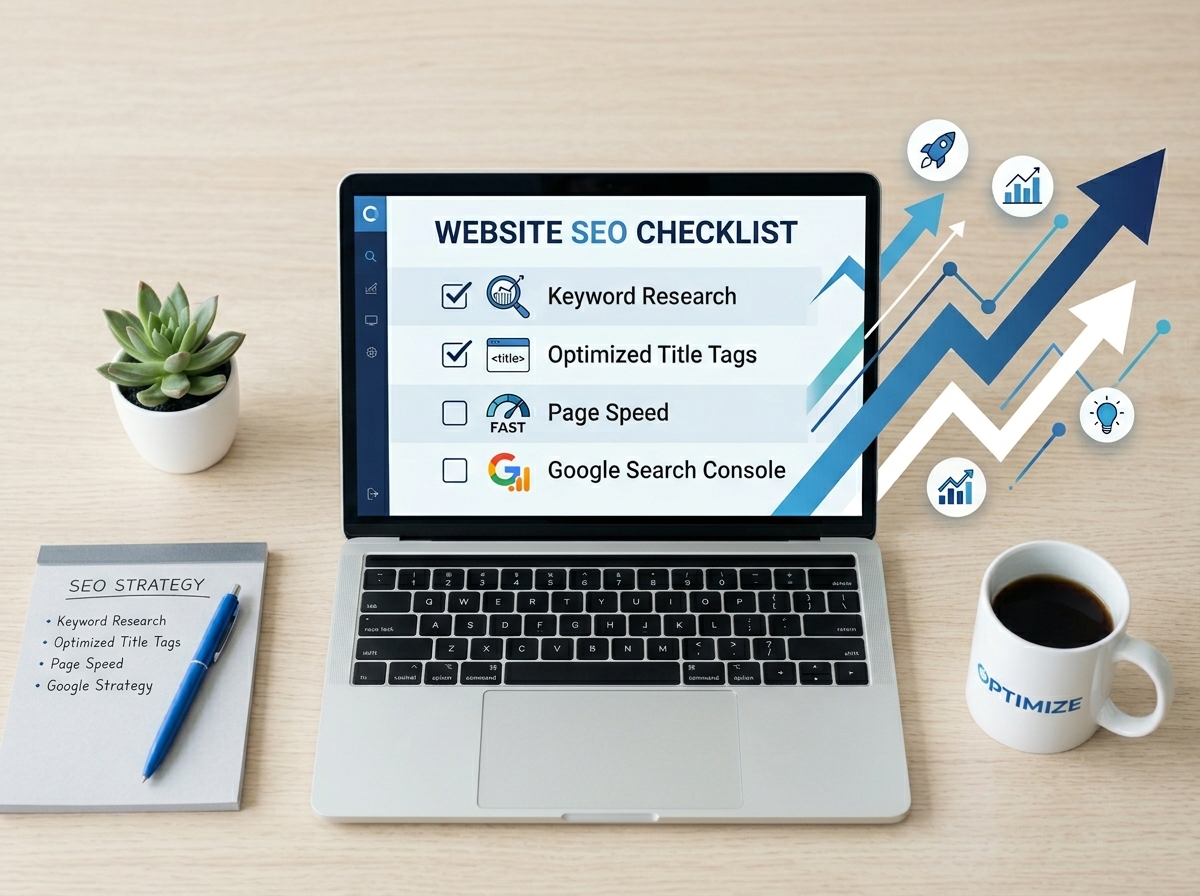
The Ultimate On-Page SEO Checklist for 2026
If you want your website to rank higher on Google this year, you need a reliable on-page SEO checklist to guide every page you publish. Search engines are smarter than ever, and the rules of optimization have evolved significantly. Whether you are a business owner managing your own site or a digital marketer fine-tuning client campaigns, this guide covers everything you need to know to stay competitive in 2026.
On-page SEO refers to all the optimizations you make directly on your web pages to improve their visibility in search results. Unlike off-page SEO, which involves backlinks and external signals, on-page SEO is entirely within your control. That makes it one of the most powerful tools in your digital marketing arsenal.
Why On-Page SEO Still Matters in 2026
With AI-generated content flooding the internet and search algorithms becoming increasingly sophisticated, quality and relevance matter more than ever. Google’s ranking systems now prioritize pages that demonstrate Experience, Expertise, Authoritativeness, and Trustworthiness — commonly known as E-E-A-T. A well-executed on-page strategy signals all four of these qualities to search engines and to your readers.
Skipping on-page optimization means leaving traffic, leads, and revenue on the table. Even a beautifully designed website will struggle to rank without the right technical and content foundations in place.
Complete On-Page SEO Checklist for 2026
1. Keyword Research and Placement
Every optimized page starts with a clear target keyword. Use tools like Google Keyword Planner, Ahrefs, or SEMrush to identify keywords with strong search volume and manageable competition. Once you have your focus keyword, place it strategically:
- Page title (H1): Include your primary keyword naturally in the main heading
- First 100 words: Mention the keyword early to signal relevance to search engines
- Subheadings (H2 and H3): Use keyword variations and related terms throughout
- Body content: Aim for a natural keyword density of 1 to 2 percent
- URL slug: Keep it short, descriptive, and keyword-rich
2. Title Tags and Meta Descriptions
Your title tag is one of the most important on-page SEO elements. Keep it under 60 characters, lead with your focus keyword, and make it compelling enough to earn the click. Your meta description should be between 150 and 160 characters, include the keyword, and end with a clear call-to-action like “Learn more” or “Get started today.”
3. Header Tag Structure
Proper use of header tags (H1 through H6) helps both users and search engines understand your content hierarchy. Every page should have one H1 tag that includes your primary keyword. Use H2 tags for main sections and H3 tags for subsections. This logical structure improves readability and helps Google crawl your content more effectively.
4. Content Quality and Depth
In 2025, thin content simply will not rank. Google rewards pages that thoroughly answer user intent. Aim for comprehensive, well-researched content that covers your topic from multiple angles. Use real examples, data, and actionable insights. If you are targeting a competitive keyword, analyze the top-ranking pages and ensure your content is more valuable and complete.
- Write for humans first, search engines second
- Use short paragraphs and bullet points for readability
- Include statistics, case studies, or expert quotes where relevant
- Update older content regularly to keep it fresh and accurate
5. Image Optimization
Images enhance user experience but can slow down your site if not properly optimized. Follow these best practices for every image you upload:
- File name: Use descriptive, keyword-rich file names before uploading
- Alt text: Write concise alt descriptions that include relevant keywords naturally
- File size: Compress images using tools like TinyPNG or ShortPixel to improve page speed
- Format: Use WebP format where possible for faster loading times
6. Internal Linking Strategy
Internal links are a powerful but often overlooked part of any on-page SEO checklist. Linking to related pages on your website helps distribute page authority, keeps visitors engaged longer, and helps search engines discover and index more of your content. For example, if you are writing about SEO strategies, you might link to your posts on keyword research tips or your guide on technical SEO fundamentals. Aim to include two to five relevant internal links per page using descriptive anchor text.
7. Page Speed and Core Web Vitals
Google officially uses Core Web Vitals as a ranking factor. These metrics measure loading performance, interactivity, and visual stability. Use Google PageSpeed Insights or GTmetrix to audit your pages and identify issues. Common fixes include enabling browser caching, minifying CSS and JavaScript, and using a content delivery network (CDN).
8. Mobile Optimization
More than 60 percent of all web traffic now comes from mobile devices. Google uses mobile-first indexing, meaning it primarily evaluates the mobile version of your site for ranking purposes. Ensure your pages are fully responsive, buttons are easy to tap, and text is readable without zooming. Test every page using Google’s Mobile-Friendly Test tool.
9. Schema Markup
Structured data helps search engines understand the context of your content and can unlock rich results like star ratings, FAQs, and event listings in the SERPs. Use schema markup for articles, products, local businesses, reviews, and FAQs wherever applicable. Tools like Google’s Structured Data Markup Helper make implementation straightforward even for non-developers.
10. URL Structure
Clean, descriptive URLs improve both user experience and search engine crawlability. Keep URLs short, use hyphens to separate words, include your target keyword, and avoid unnecessary parameters or numbers. A good URL looks like this: yoursite.com/on-page-seo-checklist rather than yoursite.com/page?id=1234.
Putting Your On-Page SEO Checklist Into Action
Having a checklist is only valuable if you use it consistently. Apply this on-page SEO checklist to every new page you create and revisit existing pages regularly to identify gaps. SEO is not a one-time task — it is an ongoing process that rewards consistency and attention to detail.
Start by auditing your five most important pages using the criteria above. Fix the quick wins first — title tags, meta descriptions, and internal links — then work toward deeper improvements like content expansion and schema implementation. Small, consistent improvements compound over time into significant ranking gains.
Ready to Improve Your Search Rankings?
Implementing a thorough on-page SEO checklist is one of the highest-return activities you can invest in for your website. If you want expert help optimizing your pages and building a search strategy that drives real results, contact our team today for a free SEO audit. Let us help you turn your website into a lead-generating machine in 2026 and beyond.