
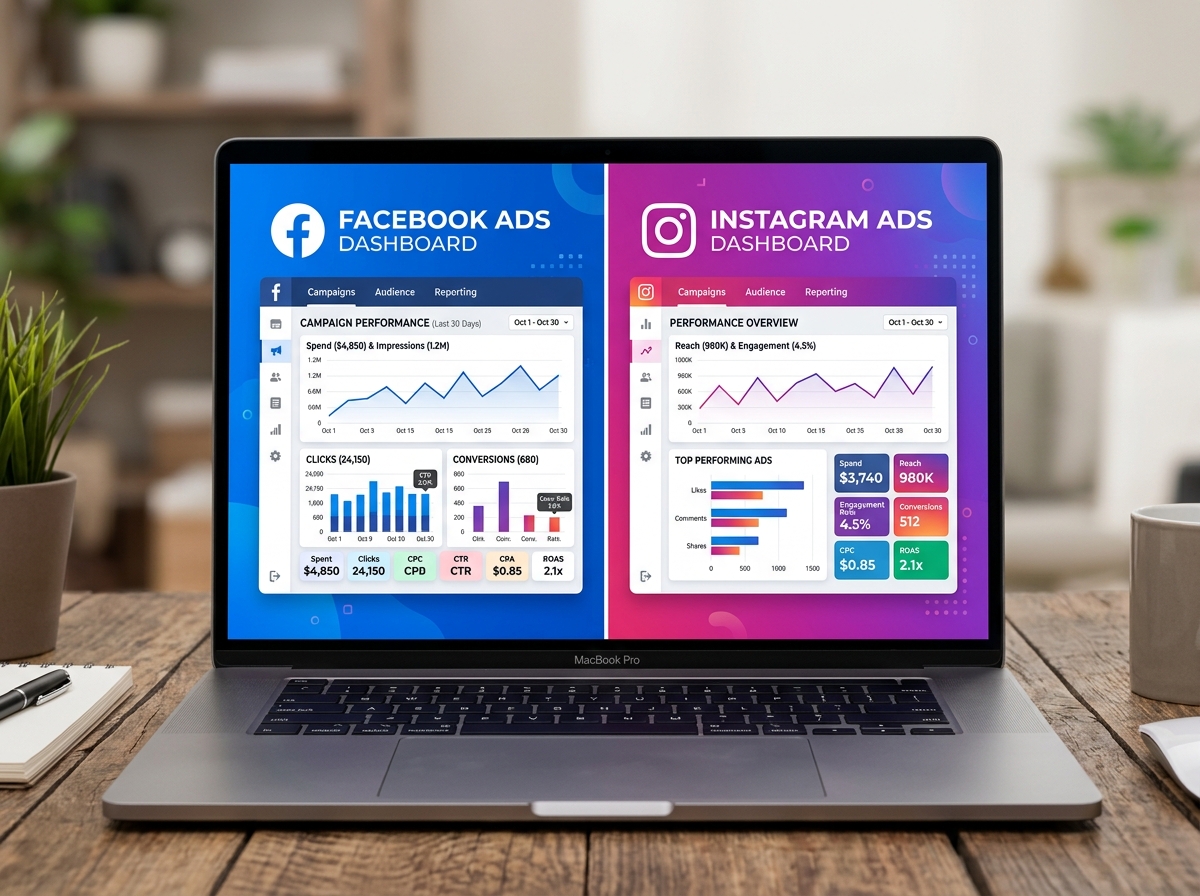
Facebook Ads vs Instagram Ads: Which Performs Better for Your Business?
When it comes to paid social media advertising, one question comes up again and again: Facebook ads vs Instagram — which one actually delivers better results? Both platforms are owned by Meta and share the same powerful Ads Manager, but they attract different audiences, drive different behaviors, and perform differently depending on your goals. In this guide, we break down everything you need to know so you can make a smarter decision about where to put your ad budget.
Understanding the Core Differences
Before diving into performance metrics, it’s important to understand what makes each platform unique. Facebook has been around since 2004 and boasts over 3 billion monthly active users, making it the largest social media platform in the world. Instagram, launched in 2010 and acquired by Meta in 2012, has grown to over 2 billion monthly active users and is heavily focused on visual content.
The way users interact with content on each platform is fundamentally different. Facebook users tend to engage with longer posts, articles, events, and community groups. Instagram users are drawn to high-quality images, short-form video (Reels), and aesthetically curated content. These behavioral differences have a direct impact on how your ads perform.
Audience Demographics: Who Are You Reaching?
Facebook’s Audience
- Age range: Strongest with users aged 25–54
- Gender split: Slightly more male users globally
- Usage behavior: Longer sessions, more desktop usage
- Best for: B2B, local businesses, older demographics, community-driven brands
Instagram’s Audience
- Age range: Strongest with users aged 18–34
- Gender split: Slightly more female users
- Usage behavior: Mobile-first, highly visual, discovery-focused
- Best for: E-commerce, fashion, beauty, lifestyle, food, and younger consumer brands
If your target audience skews younger and responds well to visual storytelling, Instagram may be your best bet. If you’re targeting a broader or older demographic — or running B2B campaigns — Facebook’s reach and targeting depth give it a clear edge.
Ad Formats: What’s Available on Each Platform?
Both platforms offer a wide range of ad formats through Meta Ads Manager, but how those formats perform varies by platform.
Facebook Ad Formats
- Image and video ads in the News Feed
- Carousel ads
- Collection ads
- Lead generation forms
- Marketplace ads
- Right column ads (desktop only)
- Stories and Reels ads
Instagram Ad Formats
- Photo and video ads in the Feed
- Stories ads (full-screen, immersive)
- Reels ads (short-form video)
- Explore ads
- Shopping ads
- Carousel ads
Instagram’s Stories and Reels placements are particularly powerful for driving engagement and brand awareness, especially with younger audiences. Facebook’s lead generation forms, on the other hand, are hard to beat for capturing contact information directly within the platform.
Cost Comparison: Where Does Your Budget Go Further?
When comparing Facebook ads vs Instagram on cost, the answer isn’t always straightforward — it depends heavily on your industry, audience, and campaign objective.
Generally speaking:
- Facebook tends to have a lower average Cost Per Click (CPC), often ranging from $0.50 to $2.00 depending on the niche
- Instagram typically has a higher CPC, ranging from $0.80 to $3.00+, but often delivers higher engagement rates
- Instagram ads can deliver a lower Cost Per Engagement in visually-driven industries like fashion, beauty, and food
- Facebook often wins on Cost Per Lead for service-based businesses and B2B campaigns
The key takeaway: Instagram may cost more per click, but if your audience is highly active there, the quality of those clicks can justify the spend.
Engagement and Conversion Performance
Engagement rates on Instagram are consistently higher than on Facebook. Studies show that Instagram posts generate up to 4x more interactions than Facebook posts on average. This translates to ads that feel more native and less intrusive — especially in Stories and Reels formats.
However, when it comes to conversion rates, Facebook often pulls ahead — particularly for direct response campaigns, retargeting, and lead generation. Facebook’s more mature pixel tracking, broader audience data, and longer user sessions make it a strong performer for bottom-of-funnel campaigns.
For e-commerce brands, Instagram Shopping ads have become a game-changer, allowing users to purchase directly from the app. This has significantly closed the conversion gap between the two platforms in the retail space.
Targeting Capabilities: A Level Playing Field
Since both platforms use Meta’s Ads Manager, the targeting options are largely the same. You can target by:
- Demographics (age, gender, location, language)
- Interests and behaviors
- Custom Audiences (email lists, website visitors)
- Lookalike Audiences
- Retargeting based on engagement or purchase history
The difference lies in where your audience actually spends their time. Even with identical targeting, an ad shown to a 45-year-old business owner on Facebook will likely outperform the same ad shown on Instagram — and vice versa for a 22-year-old fashion enthusiast.
Which Platform Should You Choose?
The honest answer is: it depends on your business, your audience, and your goals. Here’s a quick decision framework to help you choose:
- Choose Facebook if: You’re targeting users 35+, running B2B campaigns, focused on lead generation, or promoting local services
- Choose Instagram if: You have strong visual content, targeting users 18–34, running e-commerce or product-based campaigns, or building brand awareness
- Use both if: You have the budget to test, want maximum reach, or are running a full-funnel strategy
In many cases, the smartest approach when evaluating Facebook ads vs Instagram is to run campaigns on both platforms simultaneously, analyze the data, and then double down on what’s working. Meta’s Ads Manager makes it easy to split test placements and compare performance side by side.
Final Thoughts
There’s no universal winner in the Facebook ads vs Instagram debate — both platforms offer incredible opportunities when used strategically. Facebook brings unmatched reach, powerful lead generation tools, and strong performance for older demographics. Instagram delivers higher engagement, stunning visual ad formats, and a highly active younger audience that’s ready to discover and buy.
The best strategy? Test both, track your results, and let the data guide your budget. Understanding your audience is the foundation of any successful paid social campaign — and once you know where they hang out, you’ll know exactly where to invest.
Ready to launch high-performing social media ad campaigns but not sure where to start? Contact our digital marketing team today for a free strategy consultation. We’ll help you build a paid social strategy that drives real results — on the right platform, for the right audience, at the right time.