
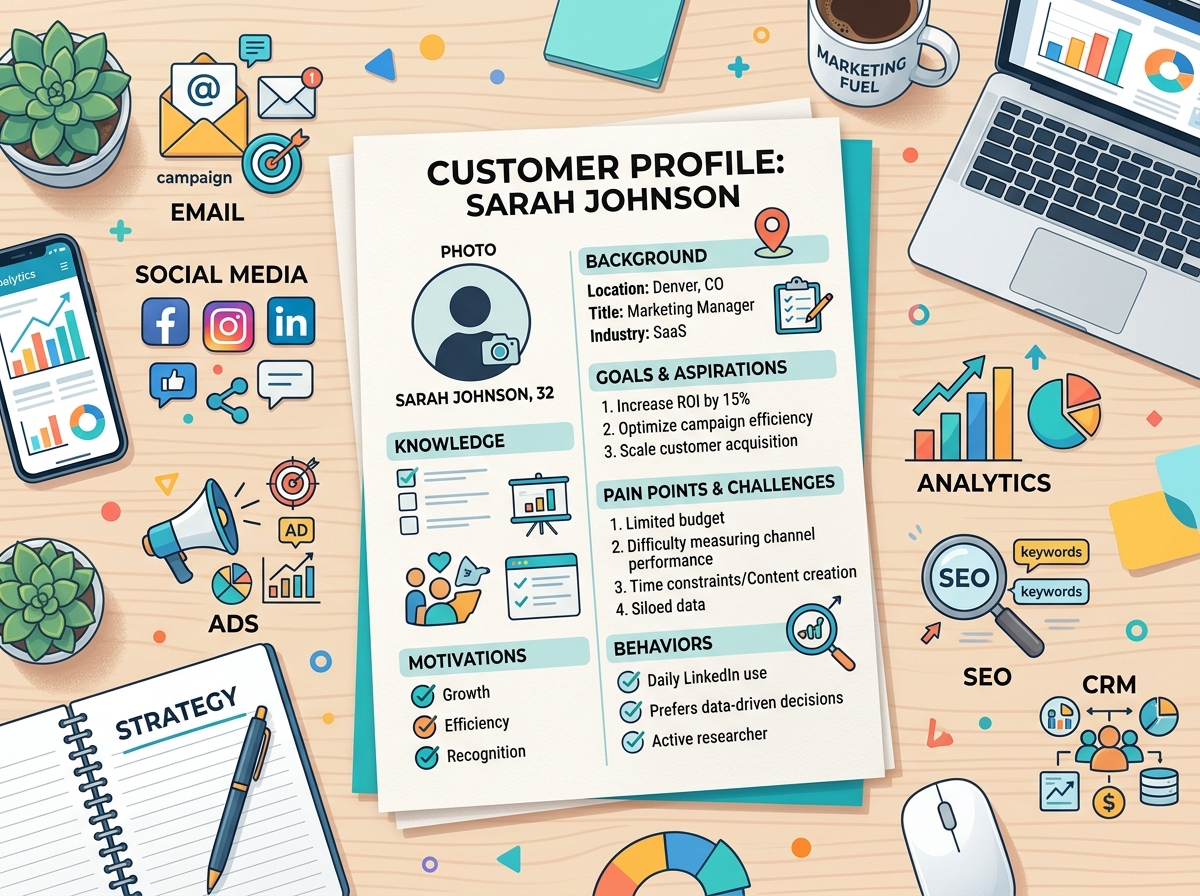
If your marketing feels like you’re shouting into the void — posting content, running ads, and sending emails but getting little response — the problem might not be your message. It might be that you don’t have a clear picture of who you’re talking to. That’s where customer avatar creation comes in. Building a detailed profile of your ideal customer is one of the most powerful things you can do to sharpen your marketing and start attracting the right people.
In this guide, you’ll learn exactly what a customer avatar is, why it matters, and how to build one that actually improves your results — even if you’re just getting started.
What Is a Customer Avatar (And Why Should You Care)?
A customer avatar — also called a buyer persona or ideal customer profile — is a detailed, semi-fictional representation of your perfect customer. It goes beyond basic demographics like age and location. A strong avatar captures your customer’s goals, frustrations, buying habits, and the language they use to describe their problems.
Think of it this way: when you know exactly who you’re talking to, every piece of content you create, every ad you run, and every email you send becomes more relevant. Relevant marketing gets more clicks, more conversions, and more loyal customers. Without a clear avatar, you’re guessing — and guessing is expensive.
The Difference Between a Vague Audience and a Clear Avatar
A vague audience might be: “women aged 25–45 who like fitness.” A clear customer avatar looks more like: “Sarah, 34, a busy working mom who wants to lose weight but struggles to find time to meal prep and feels overwhelmed by conflicting diet advice online.” See the difference? The second version gives you something to work with.
When your marketing speaks directly to “Sarah,” she feels seen — and people buy from brands that make them feel understood. That’s the real power of customer avatar creation.
How to Build Your Customer Avatar Step by Step
You don’t need a big budget or a marketing team to do this. You just need the right questions and a willingness to dig into what your customers actually think and feel. Here’s how to get started.
Step 1: Start With What You Already Know
Look at your existing customers — even if you only have a handful. Who are your best clients? Who gets the most value from what you offer? Who refers others to you? These people are your starting point. Pull any data you have from your CRM, email list, or social media analytics to identify patterns.
- What industry or life stage are they in?
- What problem brought them to you?
- What result did they get from working with you?
- How did they find you?
Step 2: Research Their Pain Points and Goals
This is where most business owners stop short — and it’s the most important part. You need to understand what keeps your ideal customer up at night and what they’re dreaming about. The best places to find this information include customer reviews (yours and your competitors’), Facebook groups, Reddit threads, and even direct conversations with past clients.
Pay close attention to the exact words they use to describe their problems. When you mirror that language back in your marketing, it creates an instant connection. This is also where a strong SEO content strategy becomes invaluable — because you can create content that answers the exact questions your avatar is already searching for.
Step 3: Fill In the Full Profile
Now bring it all together into a single document. Give your avatar a name, a photo (stock image works fine), and fill in the following details:
- Demographics: Age, gender, location, job title, income level
- Goals: What do they want to achieve personally or professionally?
- Pain Points: What’s frustrating them or holding them back?
- Objections: Why might they hesitate to buy from you?
- Preferred Channels: Where do they spend time online — Instagram, LinkedIn, YouTube?
- Buying Triggers: What finally pushes them to take action?
The more specific you get, the more useful your avatar becomes. Don’t be afraid to get granular — it’s not about limiting your audience, it’s about speaking to them more effectively.
How to Use Your Customer Avatar in Your Marketing
Creating the avatar is only half the work. The real value comes from actually using it. Once you have your customer avatar, it should inform everything — from the tone of your social media posts to the headlines on your website to the targeting settings in your ad campaigns.
Content and Messaging
Every blog post, caption, or email you write should feel like it was written specifically for your avatar. Ask yourself: “Would Sarah find this helpful? Does this speak to her specific situation?” If the answer is no, rework it. This is especially important for your website copy — your homepage should immediately signal to your ideal customer that they’re in the right place. If you need help with that, check out our guide on writing website copy that converts.
Social Media and Paid Ads
Knowing your avatar’s preferred platforms and online habits makes your social media marketing far more targeted. Instead of posting everywhere and hoping for the best, you can focus your energy where your ideal customer actually hangs out. For paid ads, your avatar’s demographics and interests translate directly into targeting options on platforms like Meta and Google.
Automation and Follow-Up
Once you know your avatar’s buying journey, you can build smarter automations that nurture leads at the right time with the right message. Tools like Make.com make it easy to set up workflows that respond to customer behavior automatically. Learn more about how Make.com automation can save you time and boost conversions.
Common Mistakes to Avoid
Even well-intentioned business owners make a few key mistakes during customer avatar creation. Here’s what to watch out for:
- Making it too broad: “Anyone who needs marketing help” is not an avatar. Get specific.
- Basing it on assumptions: Use real data and real conversations, not guesses.
- Creating it once and forgetting it: Your avatar should evolve as your business and market change.
- Building too many avatars at once: Start with one primary avatar and expand later.
Key Takeaways
- Customer avatar creation helps you speak directly to your ideal customer, making your marketing more relevant and effective.
- A strong avatar goes beyond demographics — it captures goals, pain points, objections, and buying triggers.
- Use real customer data, reviews, and conversations to build an accurate profile (not assumptions).
- Your avatar should guide your content, social media, ads, and automation strategies.
- Revisit and refine your avatar regularly as your business grows and your audience evolves.
Getting clear on your ideal customer is one of the highest-leverage things you can do for your business. When your marketing speaks directly to the right person, everything gets easier — more engagement, more leads, and more sales with less wasted effort.
Ready to build a marketing strategy around your ideal customer? Contact the team at LetsGetSocialOnline.com and let’s create a plan that attracts the right people and grows your business — starting today.