
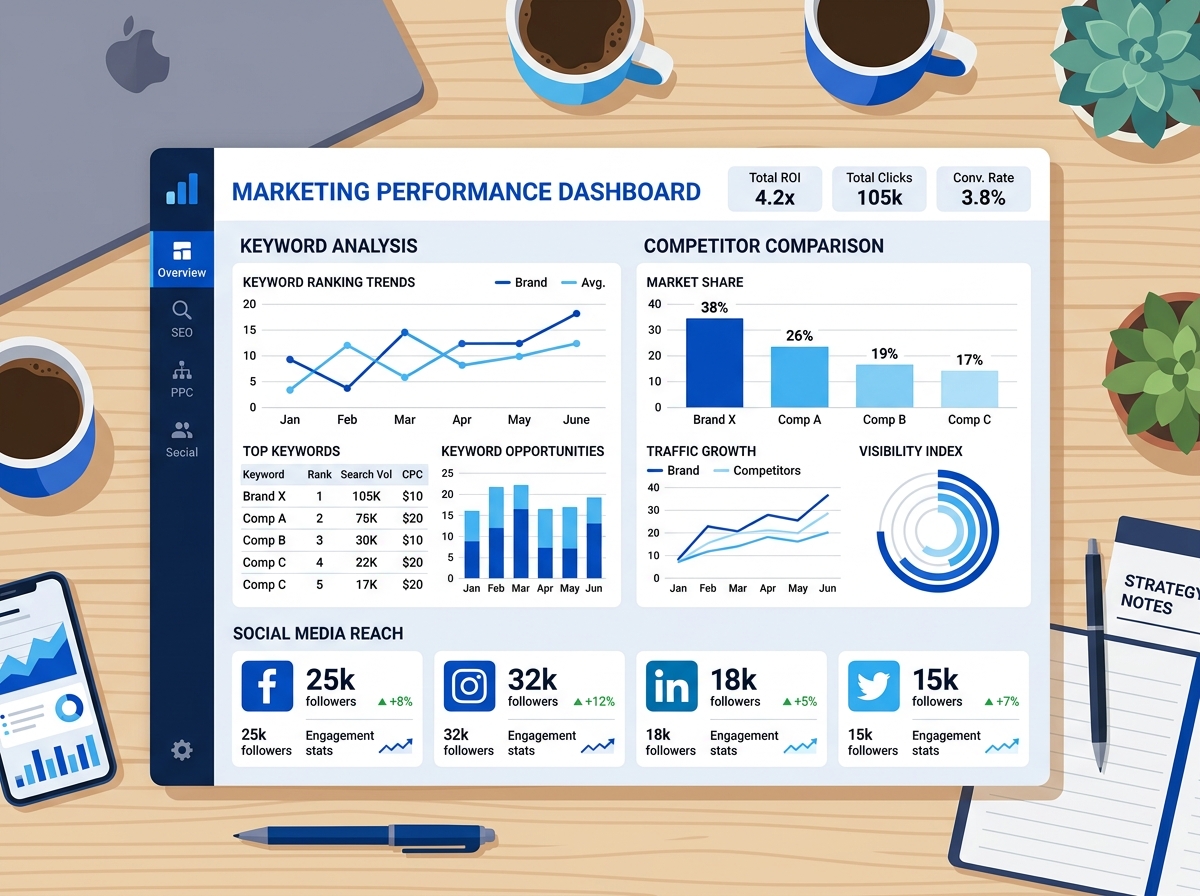
If you want to grow your business online, you need to know what you’re up against. A solid competitive analysis digital marketing framework gives you the clarity to stop guessing and start making smarter decisions. Instead of wondering why a competitor is outranking you or getting more engagement, you’ll know exactly what they’re doing — and how to do it better.
This guide walks you through a practical, step-by-step framework you can start using today. No complicated tools required. Just a clear process that helps you understand your market, spot opportunities, and build a strategy that actually works for your business.
Why Competitive Analysis Matters for Digital Marketing
Many small business owners skip competitor research because it feels overwhelming or time-consuming. But here’s the truth: your competitors are already doing it. If you’re not paying attention to what’s working in your industry, you’re leaving growth on the table.
A strong competitive analysis helps you identify gaps in the market, understand what your audience is responding to, and find ways to differentiate your brand. It’s not about copying what others are doing — it’s about learning from the landscape so you can carve out your own winning position.
- Discover which keywords your competitors are ranking for
- Understand what content resonates with your shared audience
- Identify weaknesses in their strategy you can capitalize on
- Benchmark your own performance against industry standards
- Spot trends before they become mainstream
Whether you’re just starting out or looking to scale, competitive analysis digital marketing is one of the highest-leverage activities you can invest time in. Think of it as your business GPS — it shows you where you are, where others are going, and the fastest route to your destination.
Step 1 — Identify Your Real Competitors
Before you can analyze anyone, you need to know who you’re actually competing with. This sounds obvious, but many businesses focus on the wrong competitors. Your real competition isn’t always the biggest brand in your industry — it’s the businesses showing up where your customers are looking.
Direct vs. Indirect Competitors
Direct competitors offer the same products or services to the same audience. Indirect competitors solve the same problem in a different way. Both matter. For example, if you run a social media management agency, a direct competitor is another agency. An indirect competitor might be a DIY scheduling tool your potential clients use instead of hiring you.
Start by Googling your main service or product keywords and see who shows up consistently. Check social media platforms for accounts targeting your audience. Ask your current clients who else they considered before choosing you. This research alone will give you a solid list to work with.
Build Your Competitor List
Aim for a focused list of 3 to 5 core competitors to analyze deeply. You can track more at a surface level, but going deep on a handful will give you far more actionable insights than a shallow look at dozens. Use a simple spreadsheet to track each competitor’s website, social channels, content strategy, and key offerings.
Step 2 — Analyze Their Digital Presence
Once you know who you’re watching, it’s time to dig into their digital footprint. This is where competitive analysis digital marketing gets really useful. You’re looking at four key areas: their website and SEO, their content strategy, their social media presence, and their paid advertising activity.
Website and SEO
Use free tools like Google Search Console, Ubersuggest, or Semrush’s free tier to see what keywords your competitors rank for. Look at their page structure, how fast their site loads, and whether they have a blog. Pay attention to the topics they cover and the questions they answer — this tells you what their audience cares about.
If you want to improve your own search visibility, understanding your competitors’ SEO strategy is a great starting point. You can learn more about how we approach this in our SEO services for small businesses.
Content and Social Media Strategy
Look at what types of content your competitors are publishing — blog posts, videos, reels, carousels, email newsletters. Notice what gets the most engagement. Are their audiences responding to educational content, behind-the-scenes posts, or promotional offers? This tells you what your shared audience values.
Check their posting frequency, the tone they use, and how they respond to comments. You’re not looking to copy their style — you’re looking for patterns and gaps. Maybe they post great content but never engage with their followers. That’s your opportunity to build a more connected community. For more on building an engaged audience, check out our guide on social media management strategies.
Paid Advertising
If your competitors are running ads, you can get a peek at their strategy using tools like Facebook Ad Library (free) or Google’s Transparency Center. Look at their messaging, offers, and visuals. Are they promoting a lead magnet, a discount, or a free consultation? This gives you insight into what’s converting in your market.
Step 3 — Turn Insights Into Action
Gathering data is only half the job. The real value of competitive analysis digital marketing comes from what you do with what you learn. This is where most businesses drop the ball — they collect information and never act on it.
After your analysis, ask yourself these questions:
- What topics or keywords are they missing that your audience needs?
- Where are they weak on social media that you can be strong?
- What do their customer reviews complain about that you can solve?
- What’s their unique selling point — and how is yours different?
- Are there platforms or channels they’re ignoring entirely?
Use these answers to update your content calendar, refine your messaging, and prioritize where you invest your marketing budget. Competitive analysis isn’t a one-time task — it’s an ongoing habit. Set a reminder to revisit your competitor research every quarter so you stay ahead of shifts in your market.
If you want to streamline this process, automation tools can help you monitor competitors consistently without spending hours each week. We use Make.com automation workflows to help clients track competitor activity and surface insights automatically.
Key Takeaways
- Competitive analysis digital marketing helps you find gaps, benchmark performance, and build a smarter strategy.
- Focus on 3–5 core competitors and analyze their SEO, content, social media, and paid ads.
- Use free tools like Google Search Console, Ubersuggest, and Facebook Ad Library to gather data without a big budget.
- Turn your findings into specific actions — update your content, refine your messaging, and fill the gaps your competitors are missing.
- Make competitor research a quarterly habit, not a one-time project, to stay ahead of market changes.
Understanding your competition is one of the smartest moves you can make as a business owner. When you know what’s working in your market — and where the opportunities are — you can stop reacting and start leading. A consistent competitive analysis digital marketing practice gives you the confidence to make decisions backed by real data, not guesswork.
Ready to build a digital marketing strategy that puts you ahead of the competition? Get in touch with our team at LetsGetSocialOnline.com and let’s create a custom plan that helps your business grow smarter, faster, and with less stress.