
If you’ve ever wondered why some businesses seem to effortlessly attract customers while others struggle to get a single lead, the answer usually comes down to one thing: a marketing funnel. Building a marketing funnel from scratch might sound intimidating, but it doesn’t have to be complicated — or expensive. In this guide, you’ll learn exactly how to create one using free tools, even if you have zero technical experience.
What Is a Marketing Funnel (And Why Does Your Business Need One)?
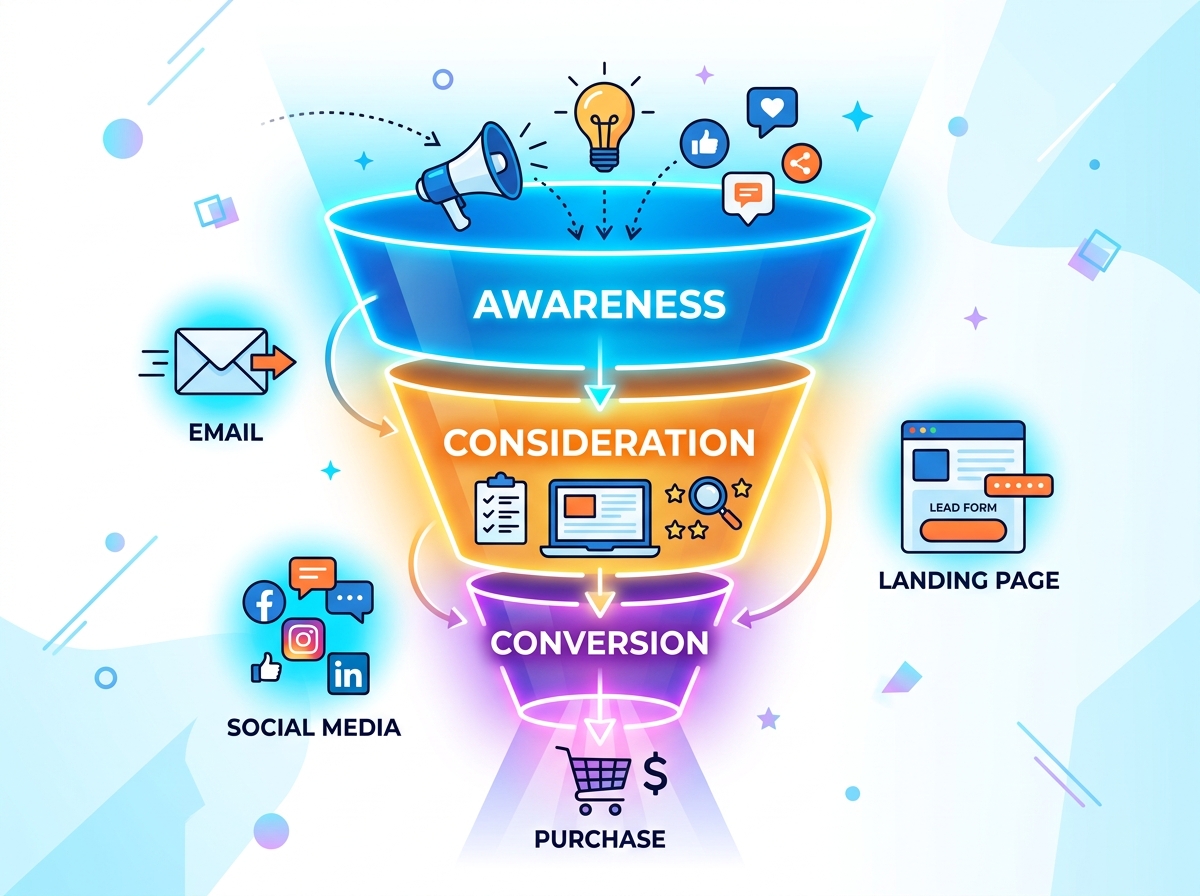
A marketing funnel is simply the journey a person takes from first hearing about your business to becoming a paying customer. Think of it like a real funnel — wide at the top where you attract lots of people, and narrower at the bottom where the most interested ones convert into buyers.
Without a funnel, your marketing efforts are scattered. You might be posting on social media, running ads, or sending emails — but none of it connects. A funnel ties everything together so every touchpoint moves your audience one step closer to saying “yes.”
The Three Core Stages of a Funnel
- Top of Funnel (Awareness): People discover your brand for the first time.
- Middle of Funnel (Consideration): They’re interested and want to learn more.
- Bottom of Funnel (Conversion): They’re ready to buy or take action.
Every piece of content, every email, and every ad you create should serve one of these three stages. Once you understand that, building your funnel becomes much more straightforward.
Step-by-Step: How to Build a Marketing Funnel From Scratch
You don’t need a big budget or a team of developers to get started. Here’s a practical, step-by-step approach to creating a marketing funnel from scratch using tools that are either free or have generous free tiers.
Step 1 — Define Your Audience and Offer
Before you build anything, get crystal clear on who you’re talking to and what problem you’re solving. Ask yourself: Who is my ideal customer? What do they struggle with? What result does my product or service deliver? The more specific you are here, the more effective your funnel will be.
Write a simple one-sentence value proposition: “I help [audience] achieve [result] without [pain point].” This becomes the foundation of every message in your funnel.
Step 2 — Create a Lead Magnet
A lead magnet is a free resource you offer in exchange for someone’s email address. It could be a checklist, a short guide, a free template, a mini-course, or even a discount code. The key is that it delivers real value and is directly related to what you sell.
Free tools to create lead magnets include Canva (for PDFs and guides), Google Docs (for checklists and templates), and Notion (for resource hubs). Keep it simple — a one-page checklist that solves a specific problem can outperform a 20-page ebook every time.
Step 3 — Build a Landing Page
Your landing page is where people sign up to receive your lead magnet. It should have one clear goal: get the visitor to enter their email. Use a free tool like Mailchimp, ConvertKit (now Kit), or Systeme.io to build a simple, clean landing page without any coding.
Keep your landing page focused. Include a compelling headline, a short description of what they’ll get, and a single call-to-action button. Remove any distractions — no navigation menus, no extra links. Learn more about optimizing your landing pages for lead generation.
Step 4 — Set Up an Email Nurture Sequence
Once someone joins your list, the real relationship-building begins. A nurture sequence is a series of automated emails that educate, inspire, and build trust with your new subscriber over time. Most free email platforms let you set up at least 3–5 automated emails to get started.
A simple sequence might look like this:
- Email 1: Deliver the lead magnet and introduce yourself warmly.
- Email 2: Share a helpful tip or quick win related to their problem.
- Email 3: Tell a story or share a client result that builds credibility.
- Email 4: Address a common objection or myth in your industry.
- Email 5: Make a soft offer — invite them to book a call, try your product, or learn more.
Step 5 — Drive Traffic to the Top of Your Funnel
Your funnel is only as good as the traffic going into it. You don’t need paid ads to get started — organic traffic works just fine when you’re building a marketing funnel from scratch. Focus on one or two channels where your audience already spends time.
Great free traffic sources include:
- SEO-optimized blog posts (like this one!)
- Instagram, Facebook, or LinkedIn content
- Pinterest for visual niches
- YouTube or short-form video
- Guest posting or podcast appearances
Consistency matters more than volume here. Showing up regularly with helpful content builds trust and keeps your funnel fed with fresh leads. Check out our guide to building a social media content strategy that drives traffic.
Free Tools to Build Your Entire Funnel
Here’s a quick overview of the best free tools to build each part of your marketing funnel from scratch:
- Systeme.io — All-in-one funnel builder with a free plan (landing pages, email, automation)
- Mailchimp or Kit — Email marketing and automation
- Canva — Design lead magnets, social graphics, and more
- Google Analytics — Track where your traffic comes from and how your funnel performs
- Calendly — Book discovery calls directly from your funnel
- Make.com — Automate repetitive tasks between your funnel tools
You can absolutely build a fully functional, professional funnel without spending a single dollar. As your business grows, you can upgrade to paid plans for more features — but start lean and prove the concept first. See how Make.com automation can supercharge your funnel workflows.
Common Mistakes to Avoid When Building Your Funnel
Even with the best tools, a few common mistakes can stall your results. Here’s what to watch out for:
- Trying to do too much at once. Build one simple funnel first, then expand.
- Skipping the nurture sequence. Most people won’t buy on the first touchpoint — follow-up is everything.
- Not tracking your results. If you don’t measure it, you can’t improve it. Check your open rates, click rates, and conversion rates regularly.
- Making it all about you. Your funnel should speak to your customer’s needs, not just promote your business.
Key Takeaways
- A marketing funnel guides potential customers from awareness to conversion — and every business needs one.
- You can build a complete marketing funnel from scratch using free tools like Systeme.io, Mailchimp, and Canva.
- Start with a valuable lead magnet, a focused landing page, and a simple 5-email nurture sequence.
- Drive traffic through organic content on the platforms where your audience already hangs out.
- Track your results from day one so you can optimize and improve over time.
Building a marketing funnel from scratch is one of the highest-leverage things you can do for your business. It works while you sleep, nurtures leads automatically, and creates a predictable path to new customers. The best part? You can start today with the tools you already have access to.
Ready to build a funnel that actually converts — but want expert help putting it all together? Get in touch with the team at LetsGetSocialOnline.com and let’s map out your custom marketing funnel strategy today.