
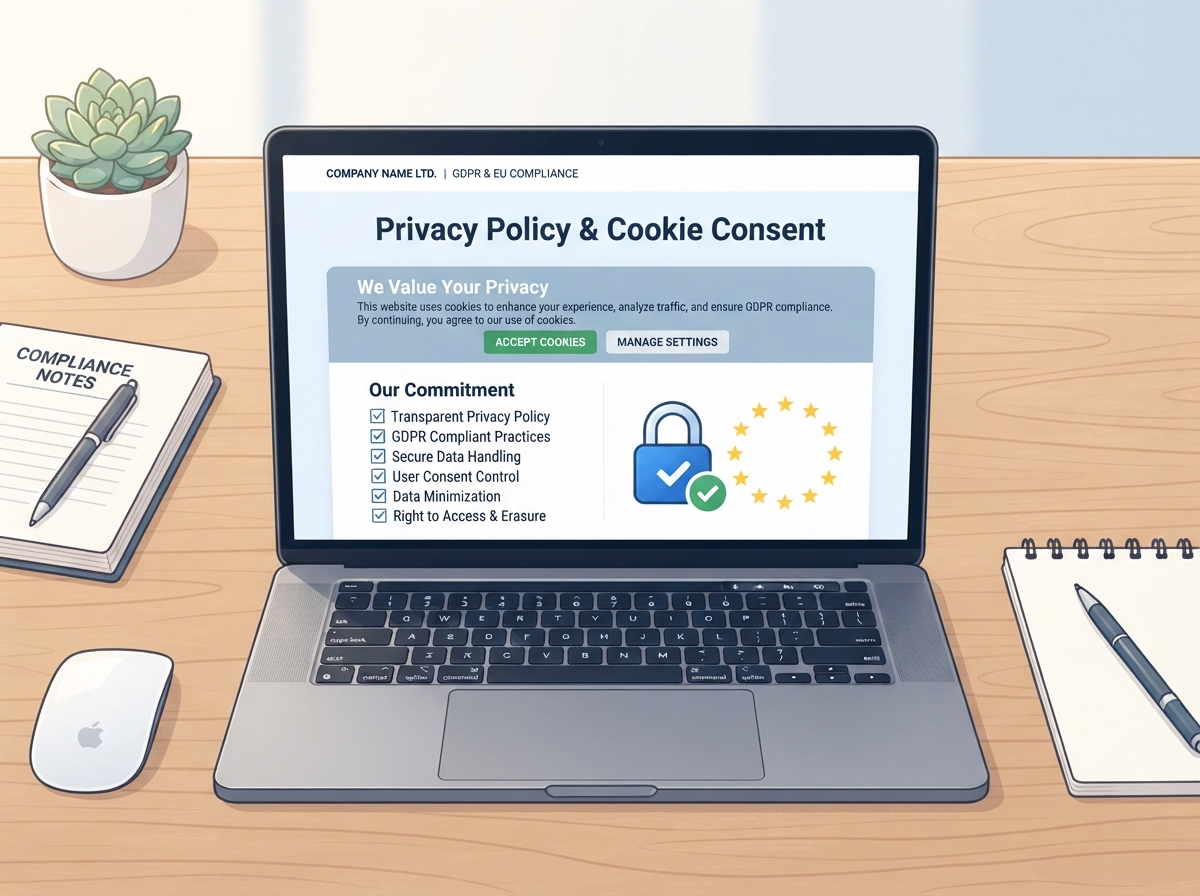
If you’ve ever wondered whether GDPR compliance for small business websites actually applies to you — the short answer is yes, it probably does. Whether you’re running an e-commerce store, a service-based business, or a simple portfolio site, if you collect any data from visitors in the EU (or even just use Google Analytics), GDPR is something you need to take seriously. The good news? It doesn’t have to be overwhelming.
This guide breaks down exactly what GDPR requires, what you can skip worrying about, and the practical steps you can take right now to get your website in order — no legal degree required.
What Is GDPR and Does It Apply to Your Business?
The General Data Protection Regulation (GDPR) is a European Union law that governs how businesses collect, store, and use personal data. It came into effect in May 2018 and applies to any business that processes the personal data of EU residents — regardless of where your business is located.
So even if you’re a small business based in the US, Canada, or Australia, if someone from the EU visits your website and you collect their email address, track their behavior, or store their purchase history, GDPR applies to you. That’s a wide net, and it catches more small businesses than most people realize.
What Counts as Personal Data?
Personal data is broader than you might think. It includes:
- Names and email addresses
- IP addresses and location data
- Cookie identifiers and browsing behavior
- Purchase history and payment information
- Form submissions and contact details
If your website collects any of the above — through contact forms, newsletter signups, analytics tools, or checkout pages — you’re processing personal data and need to be compliant.
The Core GDPR Requirements for Small Business Websites
You don’t need to build a compliance department to meet GDPR standards. For most small businesses, there are a handful of key requirements that cover the majority of your obligations. Let’s walk through them.
1. A Clear and Honest Privacy Policy
Your website needs a privacy policy that clearly explains what data you collect, why you collect it, how long you keep it, and who you share it with. This isn’t just a legal checkbox — it builds trust with your visitors. Keep it written in plain language, not legalese, and make it easy to find (typically linked in your footer).
Your privacy policy should also explain users’ rights under GDPR, including the right to access their data, request deletion, and withdraw consent. If you’re not sure where to start, there are reputable privacy policy generators online, but always have a legal professional review it if you’re unsure. You can also explore how a professionally designed website can incorporate compliance elements from the ground up.
2. Cookie Consent That Actually Works
If your website uses cookies — and almost every website does — you need to get explicit consent from visitors before placing non-essential cookies on their devices. This means a cookie banner that gives users a real choice, not just a “By continuing to use this site, you agree” message buried in the footer.
Non-essential cookies include things like analytics cookies (Google Analytics), advertising pixels (Facebook Pixel), and social media tracking. Essential cookies — like those that keep a shopping cart working — don’t require consent. Use a cookie consent management platform like Cookiebot, CookieYes, or Complianz to handle this properly on your site.
3. Lawful Basis for Processing Data
Under GDPR, you need a lawful basis for every type of data you collect. For most small businesses, this comes down to two main options: consent (the user actively agreed) or legitimate interests (you have a valid business reason that doesn’t override the user’s rights). For email marketing, consent is almost always required — and that means no pre-ticked boxes or assumed opt-ins.
4. Secure Data Storage and Handling
GDPR requires that you take reasonable steps to protect the personal data you hold. This means using SSL certificates (your site should be HTTPS), keeping your website platform and plugins updated, and not holding onto data longer than necessary. If you use third-party tools like email marketing platforms or CRMs, make sure they’re also GDPR-compliant and that you have a data processing agreement in place with them.
Common Mistakes Small Businesses Make With GDPR
Even well-meaning business owners slip up in a few predictable ways. Here are the most common GDPR mistakes to avoid:
- Using a generic privacy policy that doesn’t reflect what your site actually does
- Installing Google Analytics without a cookie consent banner — this is one of the most common violations
- Adding people to email lists without explicit consent, such as after a purchase or inquiry
- Ignoring data subject requests — if someone asks to see or delete their data, you have 30 days to respond
- Not updating your privacy policy when you add new tools or change how you use data
The good news is that most of these are easy to fix once you know about them. And if you’re building or redesigning your website, it’s the perfect time to bake compliance in from the start. Check out our guide on what to include in your website design checklist to make sure nothing gets missed.
Practical Steps to Get GDPR-Compliant Today
You don’t need to tackle everything at once. Start with these high-priority actions and work your way through the list:
- Audit your website to identify every place you collect personal data
- Install a cookie consent management tool and configure it properly
- Write or update your privacy policy to reflect your actual data practices
- Review your email marketing signup forms to ensure consent is explicit and documented
- Make sure your website is running on HTTPS with a valid SSL certificate
- Check that any third-party tools you use (CRMs, email platforms, analytics) are GDPR-compliant
If you use automation tools to manage your marketing workflows, it’s also worth reviewing how data flows through those systems. Our post on using Make.com automation for small business marketing covers how to build compliant, efficient workflows that respect user data.
Key Takeaways
- GDPR compliance for small business websites applies to you if you collect data from EU residents — regardless of where your business is based.
- A clear privacy policy, working cookie consent, and lawful data collection are the three non-negotiables for most small business sites.
- Cookie banners must offer a real choice — passive consent is not enough under GDPR.
- Secure your site with HTTPS and keep third-party tools updated and compliant.
- GDPR compliance is an ongoing process — review your practices whenever you add new tools or change how you use data.
Getting your website GDPR-compliant isn’t just about avoiding fines — it’s about building trust with your audience and showing them that you take their privacy seriously. In a world where data breaches and privacy concerns are front-page news, that trust is genuinely valuable for your brand.
Not sure where your website stands? We can help. At LetsGetSocialOnline.com, we work with small businesses to build and optimize websites that are not only beautiful and high-performing, but also built with compliance in mind. Get in touch with our team today and let’s make sure your website is working for you — safely and legally.