
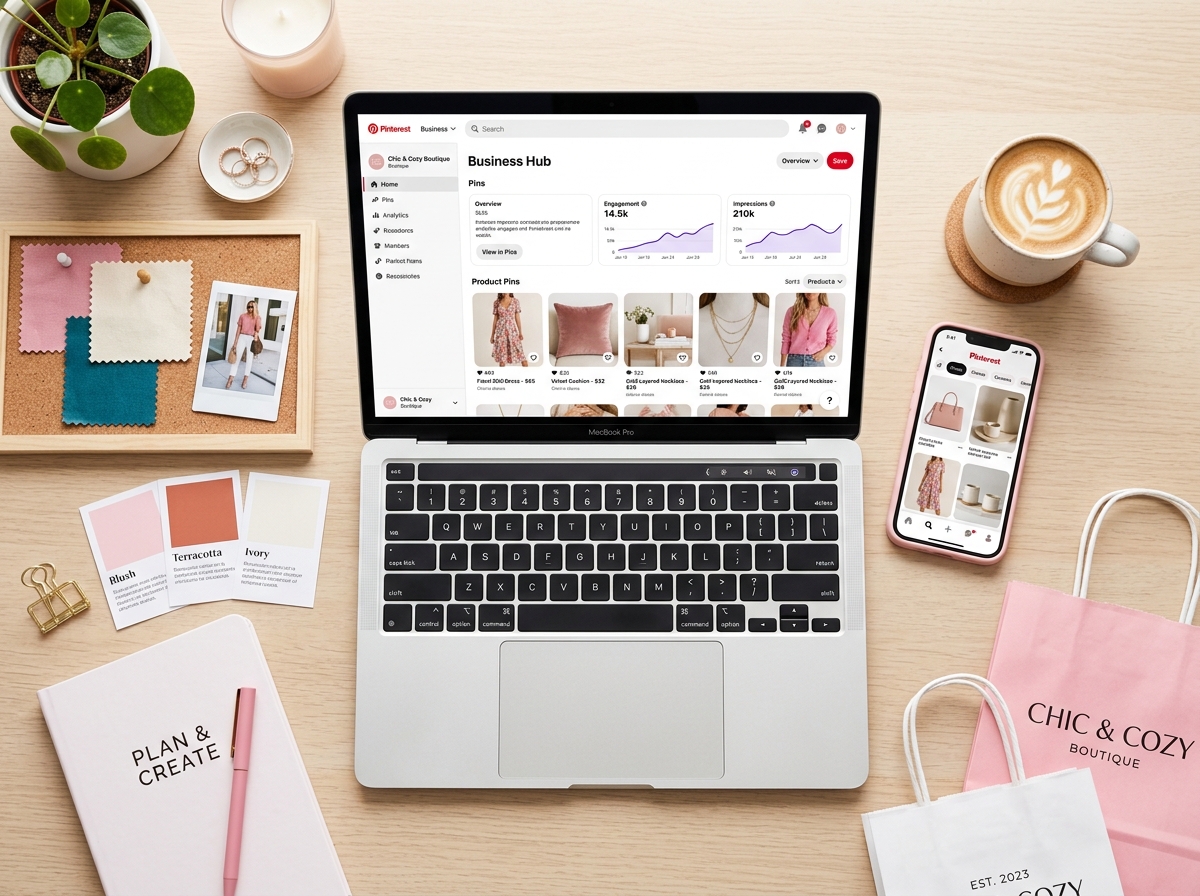
Why Pinterest Marketing Is a Game-Changer for E-commerce
If you’re running an online store and not leveraging Pinterest marketing, you’re leaving serious money on the table. With over 500 million monthly active users actively searching for products, ideas, and inspiration, Pinterest is one of the most powerful — and underutilized — platforms for e-commerce businesses. Unlike other social networks where content disappears within hours, Pinterest pins have a lifespan of months or even years, giving your content compounding reach over time.
In this guide, we’ll walk you through a complete Pinterest marketing strategy designed specifically for e-commerce brands looking to drive consistent traffic, increase product visibility, and convert browsers into buyers.
Setting Up Your Pinterest Business Account for Success
Before diving into strategy, you need the right foundation. A Pinterest Business account unlocks analytics, advertising tools, and the ability to create shoppable pins — all essential for e-commerce growth.
Optimize Your Profile
- Use your brand name as your display name for recognition and searchability.
- Write a keyword-rich bio that clearly explains what your store offers and who it serves.
- Claim your website to enable rich pins and gain access to website analytics.
- Enable Rich Pins — these automatically pull product details like pricing and availability directly from your website.
Enable Pinterest Shopping
Connect your product catalog to Pinterest through the Catalog feature. This allows your products to appear in Pinterest’s shopping tab and makes it easy for users to purchase directly. If you’re running your store on Shopify, WooCommerce, or BigCommerce, there are native integrations that make this setup seamless.
Building a Strategic Board Structure
Your Pinterest boards are essentially your store’s visual catalog. A well-organized board structure helps both users and Pinterest’s algorithm understand what your brand is about.
Tips for Creating High-Performing Boards
- Create boards around buyer intent — think “Living Room Decor Ideas” rather than just “Furniture.”
- Use keyword-rich board titles and descriptions to improve discoverability in Pinterest search.
- Mix product pins with lifestyle and inspirational content to keep boards engaging and not overly promotional.
- Organize boards by category, season, or use case to make it easy for followers to find what they need.
- Add a board cover image that reflects your brand aesthetic for a polished, professional look.
Creating Pins That Stop the Scroll
On Pinterest, visuals are everything. Your pins need to be eye-catching, informative, and optimized for both humans and the algorithm. A strong Pinterest marketing approach means treating every pin as a mini advertisement for your brand.
Pin Design Best Practices
- Use vertical images with a 2:3 aspect ratio (1000 x 1500 pixels is ideal) — they take up more screen space and perform better.
- Add text overlays that communicate the value or topic of the pin at a glance.
- Use your brand colors and fonts consistently to build recognition over time.
- Include your logo or website URL subtly in the corner of each pin.
- Use high-quality lifestyle photography that shows your product in real-world use.
Writing SEO-Optimized Pin Descriptions
Pinterest functions as a visual search engine, which means keyword optimization matters enormously. Write pin descriptions that naturally include relevant keywords your target audience is searching for. Aim for 100–200 words, include a clear call-to-action like “Shop now” or “Discover more,” and always link directly to the relevant product or landing page on your website.
Leveraging Pinterest SEO to Increase Organic Reach
One of the biggest advantages of Pinterest marketing for e-commerce is its powerful search functionality. Users come to Pinterest with high purchase intent — they’re actively looking for products and ideas. Here’s how to make sure your content shows up.
- Research keywords using Pinterest’s search bar autocomplete and the Pinterest Trends tool.
- Include primary keywords in your pin titles, descriptions, board names, and profile bio.
- Pin consistently — aim for 5–15 pins per day using a scheduling tool like Tailwind to maintain algorithm favor.
- Engage with the community by saving relevant content from others, which signals activity to the algorithm.
- Use relevant hashtags sparingly — 2 to 5 per pin is the sweet spot.
Running Pinterest Ads to Accelerate Growth
While organic Pinterest marketing can deliver impressive results, Pinterest Ads allow you to scale faster and reach highly targeted audiences. Pinterest’s advertising platform offers several ad formats perfectly suited for e-commerce.
Best Pinterest Ad Formats for E-commerce
- Shopping Ads: Promote individual products directly from your catalog with real-time pricing and availability.
- Collection Ads: Feature a hero image or video with multiple product images below — ideal for showcasing product lines.
- Carousel Ads: Allow users to swipe through multiple images, perfect for showing product variations or telling a brand story.
- Video Ads: Capture attention quickly and demonstrate products in action for higher engagement.
Start with retargeting campaigns aimed at website visitors or past customers, then expand to interest-based and keyword-targeted campaigns to reach new audiences. Pinterest’s cost-per-click tends to be lower than Facebook and Instagram, making it a cost-effective channel for e-commerce brands.
Measuring Your Pinterest Marketing Performance
You can’t improve what you don’t measure. Pinterest Analytics provides detailed insights into how your content is performing and what’s driving traffic to your store.
Key Metrics to Track
- Impressions: How many times your pins were seen.
- Saves: How often users saved your pins to their boards — a strong signal of content quality.
- Link Clicks: The number of clicks driving traffic to your website.
- Outbound Click Rate: The percentage of viewers who clicked through to your site.
- Conversions: Track purchases and revenue attributed to Pinterest using the Pinterest Tag on your website.
Review your analytics monthly to identify your top-performing pins and boards, then double down on what’s working. Use this data to refine your content strategy and ad targeting over time.
Start Building Your Pinterest Marketing Strategy Today
Pinterest is one of the few social platforms where users actively seek out products and ideas with the intention to buy. For e-commerce brands, that’s an incredible opportunity. By setting up an optimized business profile, creating visually compelling pins, leveraging Pinterest SEO, and running targeted ads, you can build a Pinterest marketing engine that drives consistent, high-quality traffic to your store month after month.
The brands winning on Pinterest right now aren’t necessarily the biggest — they’re the most strategic. Whether you’re just getting started or looking to scale an existing presence, there’s never been a better time to invest in Pinterest marketing for your e-commerce business.
Ready to take your e-commerce marketing to the next level? Explore our related guides on social media marketing strategy and e-commerce SEO tips to build a complete digital marketing system that works together. And if you need hands-on help crafting a custom strategy, contact our team today — we’d love to help your store grow.