
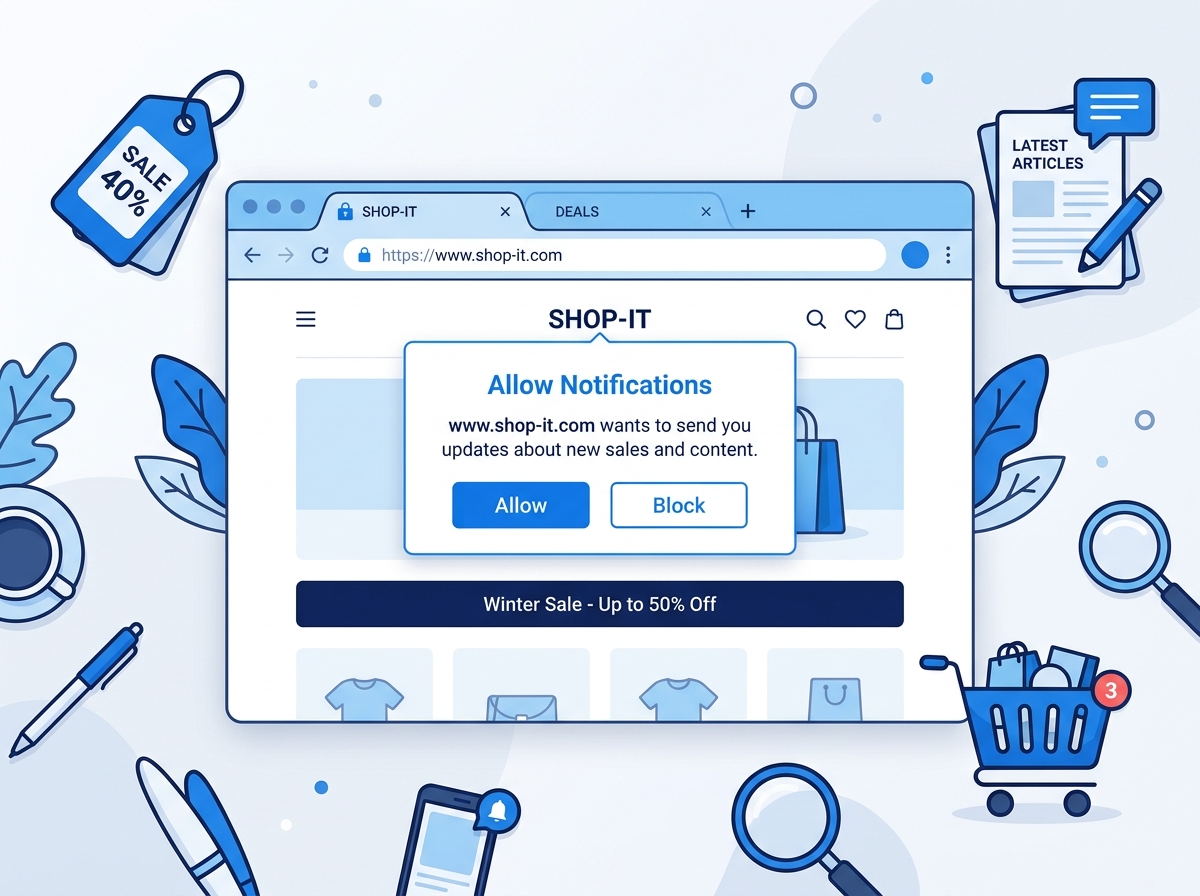
If you’ve ever visited a website and seen a pop-up asking, “Allow notifications?” — you’ve already encountered push notification marketing in action. But is it something your business should actually be using? The short answer: it depends. The longer answer is what this post is all about. Let’s break down what push notifications are, how they work, and whether they’re worth adding to your marketing toolkit.
What Is Push Notification Marketing?
Push notification marketing is a strategy where businesses send short, clickable messages directly to a user’s browser or mobile device — even when that person isn’t actively on your website. Think of it like a text message, but delivered through a browser or app without needing a phone number.
These messages can include anything from a flash sale alert to a new blog post announcement or an abandoned cart reminder. They appear as small pop-up notifications on a user’s screen, making them hard to miss without being as intrusive as a phone call or email.
How Do Push Notifications Work?
When a visitor lands on your website, they’re prompted to opt in to receive notifications. If they click “Allow,” they’re added to your subscriber list. From that point on, you can send them messages directly through their browser — on desktop or mobile — using a push notification platform like OneSignal, PushEngage, or Subscribers.com.
The best part? You don’t need their email address. The opt-in is tied to their browser, which means you have a direct line of communication that doesn’t rely on an inbox or a social media algorithm.
The Benefits of Push Notification Marketing
There’s a reason more businesses are adding push notifications to their digital strategy. When used correctly, they can be a powerful way to stay top of mind and drive repeat traffic to your site.
Higher Visibility Than Email
Email open rates typically hover around 20–30%, and that’s on a good day. Push notifications, on the other hand, have an average click-through rate of 4–8% — which sounds small, but consider that they’re delivered instantly and don’t compete with hundreds of other emails in an inbox. They show up right on the screen, right now.
Real-Time Communication
Push notifications are ideal for time-sensitive messages. Running a 24-hour sale? Launching a new product? Just published a blog post you want people to read? You can get that message in front of your subscribers within seconds. This kind of immediacy is hard to replicate with email or social media posts.
Easy Opt-In Process
Unlike building an email list, which requires a form, a lead magnet, and sometimes a double opt-in process, push notification subscribers can sign up with a single click. That low friction makes it easier to grow your audience quickly — especially if you already have solid website traffic.
If you’re still working on growing your website traffic, check out our guide on SEO tips for small businesses to help bring more visitors to your site before you start building your push subscriber list.
The Drawbacks You Should Know About
Push notification marketing isn’t perfect, and it’s not the right fit for every business. Before you dive in, it’s worth understanding the potential downsides.
Opt-Out Rates Can Be High
Because the opt-in is so easy, the opt-out is just as easy. If your notifications feel spammy, irrelevant, or too frequent, subscribers will block you — and unlike email unsubscribes, a blocked push notification sender can’t easily win that person back. Quality over quantity is the golden rule here.
Limited Message Length
Push notifications are short by design — typically just a title, a brief message, and a link. You can’t tell a full story or include detailed information. This means your messaging needs to be sharp, clear, and compelling in just a few words. If your brand relies heavily on nuanced communication, this format may feel limiting.
Browser and Device Restrictions
Not all browsers support web push notifications equally, and iOS Safari has historically had limited support (though this is improving). If a large portion of your audience uses iPhones and Safari, your reach may be more limited than you’d expect. It’s worth checking your website analytics to understand your audience’s browser habits before investing heavily in this channel.
Speaking of understanding your audience — if you’re not already using data to drive your marketing decisions, our post on digital marketing analytics for small businesses is a great place to start.
Is Push Notification Marketing Right for Your Business?
Here’s the honest truth: push notification marketing works best for businesses that already have consistent website traffic and something valuable to say on a regular basis. If you’re publishing new content, running frequent promotions, or selling products online, push notifications can be a fantastic addition to your strategy.
Best Use Cases
- E-commerce stores — abandoned cart reminders, flash sales, new arrivals
- Blogs and content creators — new post alerts, weekly roundups
- Service-based businesses — appointment reminders, seasonal promotions
- Local businesses — event announcements, limited-time offers
- Online course creators — new lesson alerts, enrollment deadlines
Tips for Getting Started
- Start with a free tool like OneSignal to test the channel before committing
- Set a sending frequency — no more than 3–5 notifications per week to start
- Personalize when possible — segment your audience by behavior or interest
- Always include a clear call-to-action and a relevant link
- Track your click-through rates and adjust your messaging based on what works
If you’re already using automation tools in your business, you can even connect push notifications to your workflows. Learn more about how Make.com automation can streamline your marketing and save you hours every week.
Key Takeaways
- Push notification marketing lets you send real-time messages directly to subscribers’ browsers without needing their email address.
- Push notifications typically outperform email in visibility and immediacy, making them great for time-sensitive offers.
- The biggest risk is subscriber fatigue — send too often or without value, and people will block you.
- This channel works best for businesses with regular content, promotions, or product updates to share.
- Start small, track your results, and scale what’s working before investing in a paid platform.
Push notification marketing isn’t a magic bullet, but for the right business, it can be a surprisingly effective way to drive repeat traffic, boost engagement, and increase sales — without relying entirely on social media or email. The key is using it strategically, not just because everyone else is doing it.
Not sure if push notifications are the right next step for your business? Let’s talk. At LetsGetSocialOnline.com, we help small businesses and entrepreneurs build smart, sustainable digital marketing strategies tailored to their goals. Contact us today and let’s figure out what’s going to move the needle for you.