
Why a Referral Marketing Program Is One of Your Best Growth Tools
If you’re looking for a cost-effective way to grow your business, a referral marketing program might be the most underrated strategy in your toolkit. Instead of spending thousands on ads, you’re leveraging something you already have — happy customers who trust your brand and talk to people just like your ideal buyer.
Word of mouth has always been powerful, but a structured referral program turns that casual conversation into a repeatable, trackable growth engine. When someone hears about your business from a friend or colleague they trust, they’re far more likely to buy — and buy faster. In fact, referred customers tend to have higher lifetime value and lower churn rates than customers acquired through paid channels.
The good news? You don’t need a massive budget or a complex tech stack to make this work. You just need a clear strategy, the right incentives, and a simple system to manage it all. Let’s break it down.
How to Build a Referral Marketing Program That Actually Works
Step 1: Define What You’re Offering as an Incentive
The foundation of any successful referral marketing program is a compelling incentive. Your customers need a reason to spread the word — and “because they love you” only goes so far. Think about what would genuinely motivate your audience to take action.
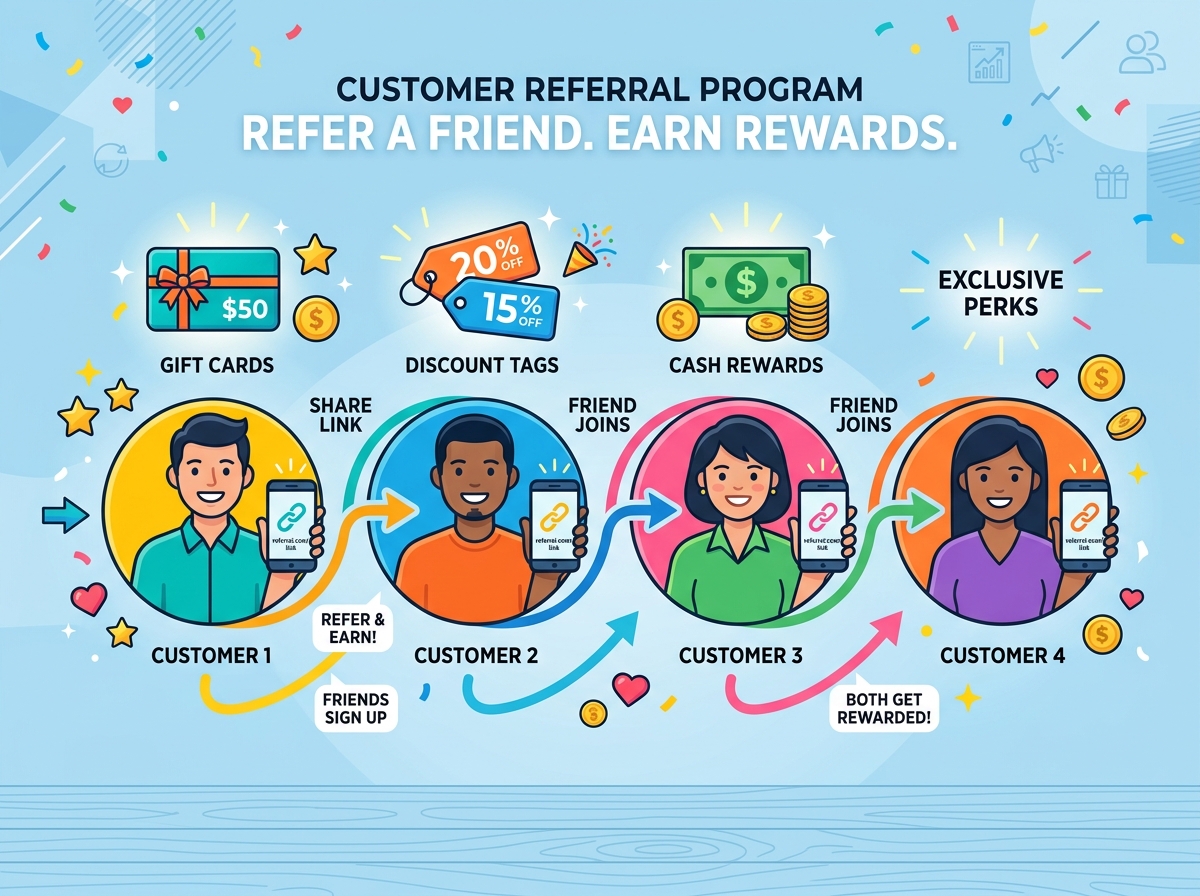
- Discounts or credits — Offer a percentage off their next purchase or a dollar amount credited to their account.
- Cash rewards — A direct payment or gift card is simple and universally appealing.
- Free products or upgrades — Give them something valuable that deepens their relationship with your brand.
- Exclusive access — Early access to new features, products, or VIP perks can feel even more special than cash.
- Two-sided rewards — Reward both the referrer and the new customer to increase conversion on both ends.
The best incentive is one that feels generous without eating into your margins. Test a couple of options and see what resonates most with your audience before committing long-term.
Step 2: Make It Ridiculously Easy to Share
Even your most loyal customers won’t refer others if the process is complicated. Friction kills referrals. Your program needs to be simple enough that someone can participate in under two minutes — no forms, no confusion, no hoops to jump through.
Give every participant a unique referral link they can share via text, email, or social media. Use a tool like ReferralHero, Friendbuy, or even a simple Google Form paired with a tracking spreadsheet if you’re just starting out. The key is making sure every referral is tracked accurately so no one gets left out of their reward.
You should also make sharing feel natural. Add referral prompts at key moments — right after a purchase, after a positive review, or when a customer hits a milestone with your product or service. Timing matters more than most people realize.
Step 3: Promote Your Program Consistently
A referral program that nobody knows about won’t generate results. You need to actively promote it across every customer touchpoint. Don’t just mention it once and move on — remind your audience regularly through email newsletters, social media posts, your website, and even your email signature.
- Add a referral CTA to your post-purchase email sequence
- Feature it on your website’s homepage or a dedicated landing page
- Mention it in your onboarding flow for new customers
- Share success stories from customers who’ve earned rewards
- Promote it on social media with a clear, simple call to action
If you’re already using social media management strategies to stay consistent online, your referral program is a natural fit for that content calendar. Treat it like a product launch — give it real visibility.
Tracking and Optimizing Your Referral Program
Metrics You Should Be Watching
You can’t improve what you don’t measure. Once your referral marketing program is live, keep a close eye on the numbers that tell you whether it’s working. The most important metrics include your referral conversion rate, the number of active referrers, cost per acquisition through referrals, and the lifetime value of referred customers compared to other channels.
If your conversion rate is low, the problem might be your landing page or the offer itself. If few customers are sharing, the issue is likely awareness or friction in the sharing process. Use this data to make small, targeted improvements over time rather than overhauling everything at once.
Automate Where You Can
Managing a referral program manually can get overwhelming fast. That’s where automation becomes your best friend. Tools like Make.com automation can help you set up workflows that automatically send reward emails, update your CRM when a referral converts, and notify your team when action is needed — all without lifting a finger.
Automation doesn’t just save time; it makes your program feel professional and reliable to participants. When someone refers a friend and gets their reward instantly, they’re far more likely to refer again. Consistency builds trust, and trust builds momentum.
Common Mistakes to Avoid With Referral Programs
Even well-intentioned referral programs can fall flat if you’re not careful. Here are a few pitfalls to watch out for as you build yours:
- Making the reward too small — If the incentive doesn’t feel worth the effort, people won’t bother.
- Forgetting to follow up — If someone refers a friend and never hears back, they’ll lose trust in your brand.
- Ignoring your best referrers — Identify your top advocates and give them extra love. A personal thank-you goes a long way.
- Not integrating it with your broader marketing — Your referral program should work alongside your email marketing strategy and other channels, not exist in a silo.
- Setting it and forgetting it — Referral programs need regular attention, promotion, and optimization to stay effective.
Key Takeaways
- A referral marketing program turns your happiest customers into a low-cost, high-trust sales channel.
- The right incentive — whether cash, discounts, or exclusive perks — is the engine that drives participation.
- Reducing friction in the sharing process is just as important as the reward itself.
- Promote your program consistently across email, social media, and your website to keep it top of mind.
- Use automation tools to manage rewards and follow-ups so your program runs smoothly at scale.
Building a referral marketing program doesn’t have to be complicated or expensive. With the right structure, a compelling offer, and a little consistency, you can turn your existing customer base into one of the most powerful growth channels your business has ever had.
Ready to put a referral strategy in place — or need help building out the full marketing system around it? Get in touch with the team at LetsGetSocialOnline.com and let’s build something that works for your business.