
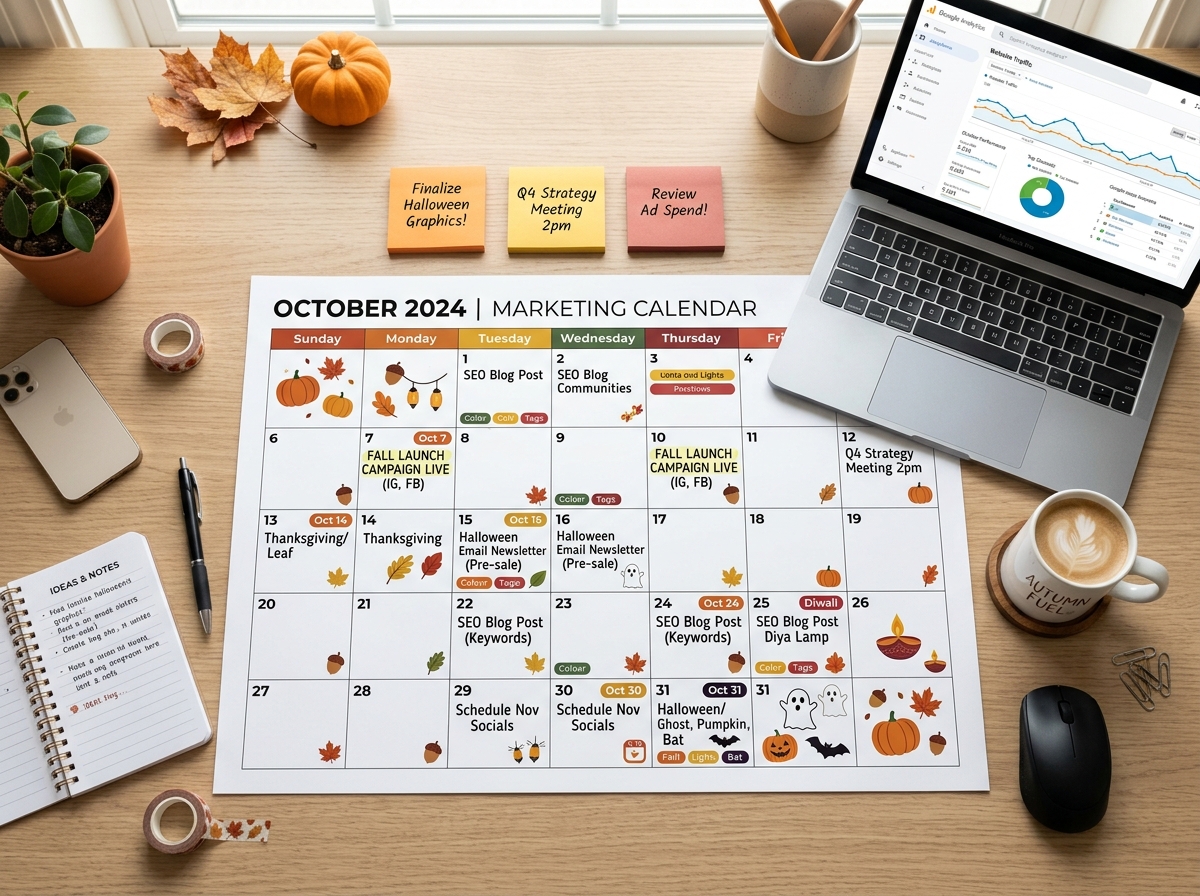
If your business only ramps up marketing when things feel slow, you’re leaving serious money on the table. A well-planned seasonal marketing strategy helps you show up at exactly the right moment — when your audience is already in the buying mindset. Whether it’s the holiday rush, back-to-school season, or a summer slowdown, every peak period is an opportunity waiting to be captured.
The good news? You don’t need a massive budget or a full marketing team to make it work. You just need a plan, the right tools, and a little preparation. Let’s break it down.
Why Seasonal Marketing Matters for Your Business
Consumer behavior shifts throughout the year — and smart businesses shift with it. People spend more during certain seasons, search for specific products and services at predictable times, and respond to timely, relevant messaging far better than generic promotions.
A strong seasonal marketing strategy lets you align your content, offers, and ad spend with those natural buying cycles. Instead of guessing when to push, you’re working with the momentum that already exists in the market.
The Cost of Not Planning Ahead
Businesses that wait until the last minute often scramble to throw together campaigns that feel rushed — and audiences can tell. Poorly timed promotions, generic messaging, and missed windows mean lost revenue and wasted ad spend. Planning ahead gives you the creative space to do it right.
Every Industry Has Its Seasons
You might think seasonal marketing is only for retail or e-commerce, but that’s not true. Restaurants, service providers, coaches, consultants, and even B2B companies all have peak periods. The key is identifying your seasons — not just the obvious holidays, but the moments when your specific audience is most ready to buy.
How to Build Your Seasonal Marketing Calendar
The foundation of any effective seasonal marketing strategy is a well-structured content and promotions calendar. This doesn’t have to be complicated — even a simple spreadsheet can do the job if it keeps you organized and on schedule.
Step 1: Map Out Your Key Dates
Start by listing the major holidays and events relevant to your industry. Then layer in your own business milestones — anniversaries, product launches, or annual sales. Don’t forget local events or niche-specific moments that matter to your audience.
- Q1: New Year’s, Valentine’s Day, Tax Season
- Q2: Spring Sales, Mother’s Day, Memorial Day
- Q3: Back-to-School, Summer Promotions, Labor Day
- Q4: Halloween, Black Friday, Cyber Monday, Christmas, New Year’s Eve
Step 2: Plan Your Content in Advance
Aim to start creating content at least 4–6 weeks before each peak period. This gives you time to build anticipation, warm up your audience, and schedule everything without the last-minute panic. Blog posts, social media content, email campaigns, and paid ads should all work together toward the same seasonal message.
If you’re not sure where to start with content planning, learn how to create a social media content calendar that keeps your marketing consistent all year long.
Step 3: Set Clear Goals for Each Season
Don’t just “do marketing” — decide what success looks like. Are you trying to grow your email list, drive website traffic, increase product sales, or book more consultations? Having a specific goal for each seasonal campaign makes it easier to measure results and improve next time.
Tactics That Make Seasonal Campaigns Actually Work
Planning is only half the battle. The other half is execution. Here are the tactics that consistently deliver results during peak periods.
Create Urgency With Limited-Time Offers
Seasonal promotions work because they have a natural deadline. Lean into that. Use countdown timers, limited-quantity messaging, and clear expiration dates to encourage action. People respond to urgency — as long as it feels genuine and not manufactured.
Personalize Your Messaging
Generic “Happy Holidays” blasts don’t cut through the noise anymore. Segment your email list and tailor your messaging based on past purchases, location, or customer behavior. A personalized offer feels like it was made just for them — and that drives conversions.
Repurpose Content Across Channels
You don’t need to create everything from scratch for every platform. Write one strong blog post, then repurpose it into social media captions, an email newsletter, short video scripts, and even paid ad copy. This approach saves time and keeps your messaging consistent. Discover how to repurpose content effectively to get more mileage from every piece you create.
Use Automation to Stay Consistent
One of the biggest challenges with seasonal marketing is staying consistent when things get busy. That’s where automation tools like Make.com become a game-changer. You can automate email sequences, social media scheduling, and even lead follow-ups so your campaigns run smoothly — even when you’re slammed with orders or client work. See how Make.com automation can simplify your marketing during your busiest seasons.
Measuring and Improving Your Seasonal Results
After each peak period, take time to review what worked and what didn’t. This is where most businesses drop the ball — they move on without capturing the lessons that could make next year’s campaign even stronger.
Key Metrics to Track
- Revenue generated during the campaign period
- Email open rates and click-through rates
- Website traffic and conversion rates
- Social media engagement and reach
- Return on ad spend (ROAS) for paid campaigns
Document Everything
Keep a simple record of what you ran, when you ran it, and how it performed. Over time, this becomes an incredibly valuable playbook that removes the guesswork from future campaigns. Your seasonal marketing strategy gets smarter every year when you treat each campaign as a learning opportunity.
- Start early: Build your seasonal campaigns 4–6 weeks before each peak period to avoid last-minute scrambling.
- Know your seasons: Every business has peak periods — identify yours beyond just the obvious holidays.
- Set specific goals: Define what success looks like for each campaign before you launch.
- Use automation: Tools like Make.com help you stay consistent during your busiest times without burning out.
- Review and improve: Track your results after every campaign and use the data to sharpen your strategy next time.
A smart seasonal marketing strategy isn’t about doing more — it’s about doing the right things at the right time. When you plan ahead, personalize your messaging, and use the right tools, every peak period becomes a real growth opportunity for your business.
Ready to build a seasonal marketing plan that actually delivers results? Get in touch with our team at LetsGetSocialOnline.com and let’s map out a strategy that works for your business all year long.