
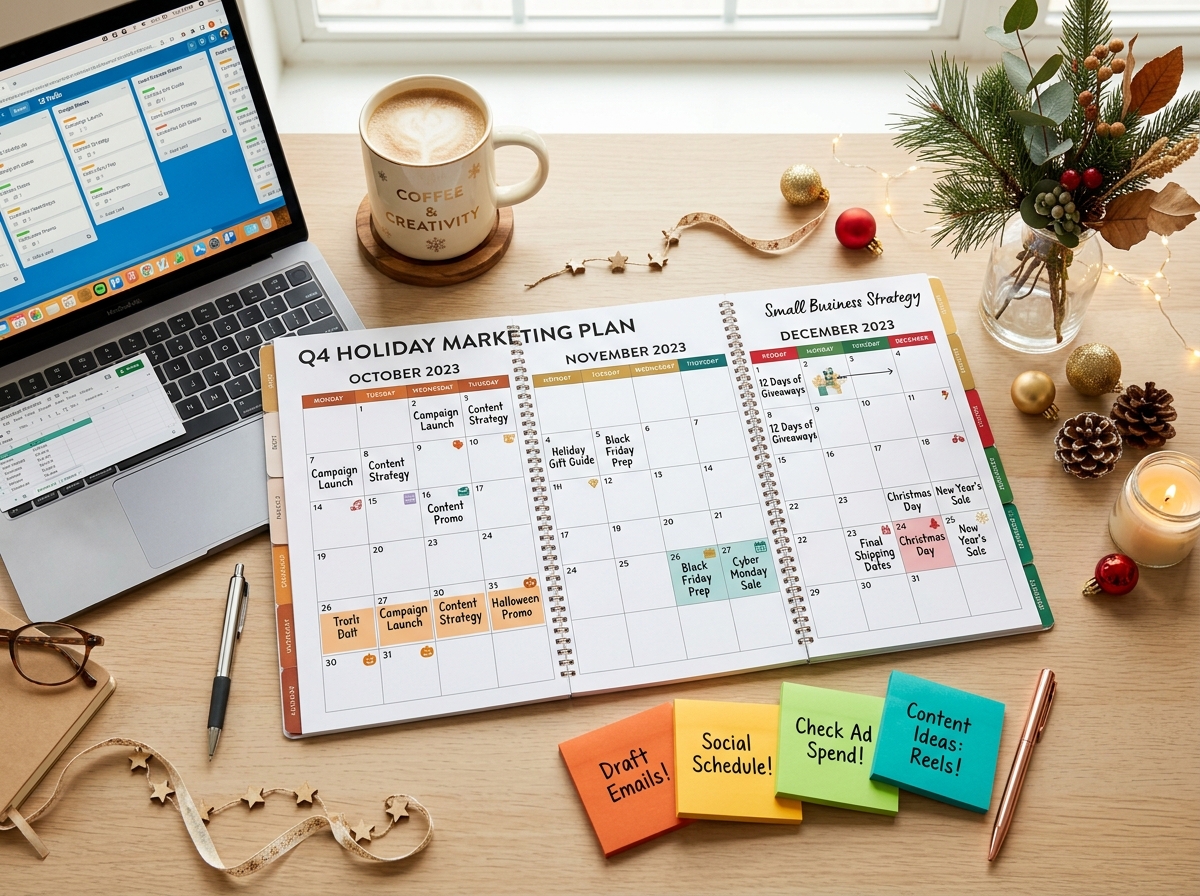
If you’ve ever scrambled to throw together a last-minute holiday promotion, you already know the stress — and the missed opportunity. Building a holiday marketing campaign calendar at least three months in advance gives your business the breathing room to plan smarter, create better content, and actually enjoy the season instead of surviving it. Whether you’re targeting Black Friday, Christmas, or New Year’s, early planning is the difference between a campaign that converts and one that gets lost in the noise.
Why Planning 3 Months Ahead Actually Matters
Most small businesses wait until October to think about holiday marketing. By then, your competitors have already locked in their ad budgets, scheduled their email sequences, and mapped out their social content. Getting ahead by 90 days isn’t just smart — it’s a competitive advantage.
When you plan early, you give yourself time to test what works, build anticipation with your audience, and avoid the costly mistakes that come from rushing. You also have more flexibility to adjust your strategy based on early results rather than reacting in a panic.
- You can negotiate better rates on paid ads before demand spikes
- Your creative team (or you!) has time to produce quality content
- You can build email lists and warm up your audience before the big push
- You avoid the burnout that comes from doing everything at once
How to Build Your Holiday Marketing Campaign Calendar
A solid holiday marketing campaign calendar doesn’t have to be complicated. It just needs to be intentional. Here’s how to break it down month by month so nothing falls through the cracks.
Month 1: Strategy and Foundation (90 Days Out)
This is your planning phase. Start by identifying which holidays are most relevant to your business and your audience. Not every business needs to go all-in on every holiday — focus on the ones that align with your products, services, and customer behavior.
During this phase, you should:
- Set clear goals — are you driving sales, growing your email list, or increasing brand awareness?
- Define your budget for ads, content creation, and promotions
- Decide on your key offers or promotions for each holiday
- Map out your content themes and messaging for the season
- Audit last year’s holiday performance to see what worked
This is also the time to make sure your website is ready. Slow load times and broken checkout flows will kill your holiday conversions. If your site needs work, explore our website design services for small businesses before the rush hits.
Month 2: Content Creation and Scheduling (60 Days Out)
Now that your strategy is locked in, it’s time to create. This is where most businesses underestimate the time required. Writing emails, designing graphics, filming short videos, and drafting social posts all take longer than you think — especially when you’re also running your business.
Use this month to batch-create as much content as possible. Write your email sequences, design your promotional graphics, and draft your social media posts. Then schedule everything in advance using a social media management tool so you’re not posting manually during the busiest weeks of the year.
- Write and schedule your holiday email sequences (teaser, launch, reminder, last chance)
- Create social media content for each platform — don’t just copy and paste
- Design any landing pages or promotional pages for your offers
- Set up your paid ad campaigns so they’re ready to launch
- Plan your blog content to support SEO during the holiday season
If you’re using AI tools to speed up content creation, this phase is where they shine. Learn how AI tools can help you create holiday content faster without sacrificing quality.
Month 3: Launch, Monitor, and Optimize (30 Days Out)
This is your execution phase. Your campaigns are live, your content is going out, and now your job is to watch the numbers and adjust. Don’t just set it and forget it — holiday campaigns reward businesses that pay attention and respond quickly.
Check your email open rates, click-through rates, and conversion data regularly. If something isn’t performing, tweak the subject line, adjust the offer, or shift your ad spend. Small optimizations during this phase can make a significant difference in your final results.
- Monitor ad performance daily and adjust budgets as needed
- Respond to comments and messages quickly — engagement drives reach
- Send follow-up emails to people who clicked but didn’t convert
- Track your revenue and compare it to your goals in real time
Tools That Make Holiday Planning Easier
You don’t need a big marketing team to pull off a great holiday campaign. The right tools can do a lot of the heavy lifting for you. A holiday marketing campaign calendar is most effective when it’s paired with automation and scheduling tools that keep everything running smoothly.
Consider using a combination of these tools to stay organized and efficient:
- Google Sheets or Notion — for building and sharing your campaign calendar
- Meta Business Suite or a social scheduler — for scheduling posts in advance
- Mailchimp, Klaviyo, or ActiveCampaign — for automated email sequences
- Make.com — for automating repetitive tasks like posting, tagging, and follow-ups
- Canva — for creating on-brand holiday graphics quickly
If you want to take automation even further, see how Make.com automation can streamline your holiday marketing workflows and save you hours every week.
Don’t Forget the Post-Holiday Strategy
Most businesses go quiet after the holidays end. That’s a missed opportunity. January is a great time to re-engage customers who bought from you, collect reviews, and set up loyalty offers that keep people coming back. Build a post-holiday follow-up sequence into your campaign calendar from the start so it’s ready to go automatically.
Think about what happens after someone makes a holiday purchase. Are they getting a thank-you email? A review request? An exclusive offer for returning customers? These small touches build long-term relationships that are worth far more than a single seasonal sale.
Key Takeaways
- Start building your holiday marketing campaign calendar at least 90 days before the season begins
- Use Month 1 for strategy, Month 2 for content creation, and Month 3 for execution and optimization
- Batch-create and schedule content in advance so you’re not scrambling during peak season
- Use automation tools like Make.com and email platforms to keep campaigns running without constant manual effort
- Plan a post-holiday follow-up strategy to turn seasonal buyers into loyal, year-round customers
The businesses that win during the holidays aren’t the ones with the biggest budgets — they’re the ones who planned ahead. If you’re ready to build a holiday marketing strategy that actually works for your business, we’d love to help. Contact our team at LetsGetSocialOnline.com and let’s map out your holiday campaign calendar together before the season sneaks up on you.